
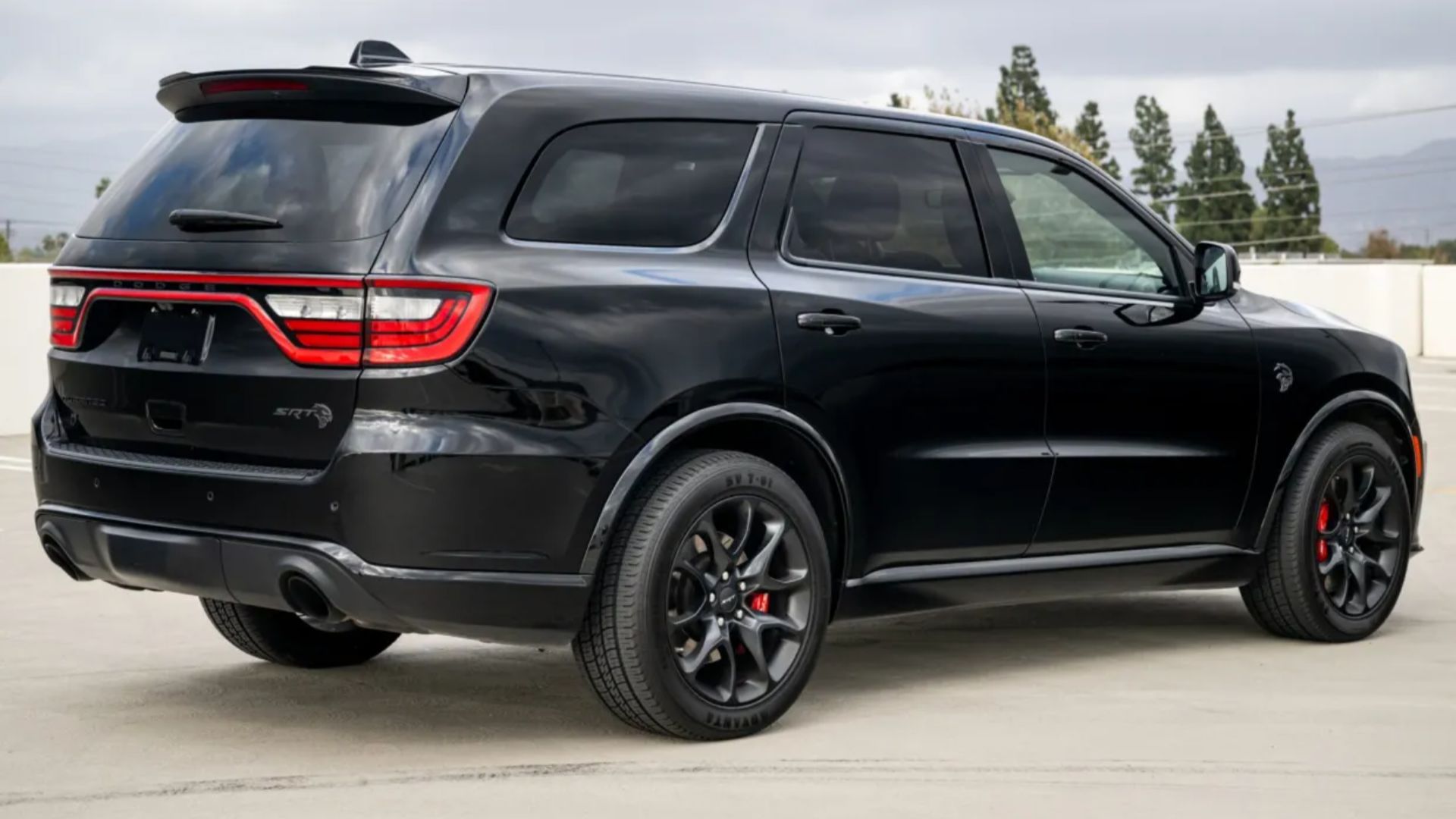
Stellantis just told federal safety regulators it is recalling about 74,578 Dodge Durangos because a rear spoiler might not be attached to the roof correctly. That’s not the story. The story is that this is the third time in five years Dodge has recalled this exact part for this exact problem, and this time the company doesn’t even have a fix ready.
The new campaign, filed with NHTSA on August 13, 2026, covers 2021 through 2023 Durangos. It says the rear spoiler may not be aligned properly with the roof, which can let it get damaged every time the liftgate opens and closes, eventually letting it detach at speed. That’s a bad but familiar sentence. Dodge has now written some version of it three separate times.
The first version showed up in October 2021, covering 4,837 brand-new Durangos. Dealers were told to inspect the spoiler and replace it if needed, free of charge. In February 2023, Dodge expanded that same campaign to 139,019 Durangos spanning three model years, using the identical remedy: inspect it, swap it if it looks bad. Add this month’s recall, and more than 218,000 individual repair opportunities have now been generated by one plastic spoiler.
Here’s the detail buried in Stellantis’s own paperwork: this recall explicitly states that Durangos already repaired under the 2021 or 2023 campaigns will need the new fix anyway. Read that again. Cars that a dealer already inspected, and in many cases already fixed, are back on the list. Whatever came off the shelf to replace those spoilers the first two times has the same problem the original part did.
That is the real story here, and it says something most drivers never think about: a recall remedy is not the same thing as a fix. When NHTSA and a manufacturer close a recall as complete, it means dealers performed the listed repair on some percentage of registered owners. It does not mean an engineer confirmed the failure mode is gone. Nobody re-tests 139,000 spoilers for long-term durability before checking the box.
Look at how Dodge classified the defect over time and the pattern gets clearer. The 2021 filing described it simply as a body structure issue. By 2023, and again this year, NHTSA’s coding narrowed it specifically to the hatchback and liftgate. That’s a hint about the actual mechanism: the Durango’s roof spoiler sits directly above a liftgate that swings open and closed every time someone loads groceries or a stroller. If that spoiler isn’t mounted with the right clearance, the liftgate’s edge can graze or load it on every cycle, slowly working a bracket or adhesive bond loose over months or years, not all at once. Swapping in another spoiler built to the same tolerance doesn’t fix a clearance problem. It just resets the clock.
There’s a second detail worth sitting with: as of this filing, the actual repair does not exist yet. It is still being engineered. Owner notification letters aren’t expected until September 10, and the VINs involved won’t even be searchable on NHTSA’s site until August 20. Federal rules let an automaker report a safety defect before it has finished engineering the cure, because the defect determination and the remedy are legally two separate steps. It’s allowed. It’s also a fairly unusual thing to watch happen twice on the same part.
Dodge isn’t the only automaker discovering that its own recall fixes don’t always hold up. NHTSA opened a fresh investigation this month into Tesla’s front suspension after the company had already tried to fix that failure twice. The pattern is the same: a repair gets rolled out, the completion rate climbs, and the underlying defect keeps producing new complaints anyway.
Not every automaker even calls this a recall. Volkswagen chose to handle a water pump problem tied to catastrophic engine failure on the Atlas with a reimbursement claim form instead of a formal NHTSA campaign. Stellantis, to its credit, kept filing this one under the recall system each time, even when doing so meant admitting its own previous fix hadn’t worked. That’s a low bar, but it’s one some manufacturers don’t clear.
The timing isn’t flattering. Stellantis is currently trying to convince the industry it can still build things correctly, between reviving its Belvidere plant for a Jeep Cherokee built on a platform that doesn’t fully exist yet and bringing V8-less cop cars to police fleets that spent decades loyal to the HEMI. A third recall on a decade-old body panel isn’t a scandal on that scale. But it’s a reminder that fixing the big, headline-grabbing platform problems doesn’t matter much if a company can’t permanently fix a spoiler bracket.
If you own a 2021-2023 Durango, here’s what actually matters: check your VIN on NHTSA’s site after August 20, and don’t assume a prior spoiler repair means you’re covered. Owner letters begin mailing around September 10, but there is currently no remedy for dealers to perform, so an early call to a dealership will likely get you an inspection and a promise, not a repair. If your spoiler already looks cracked, lifted, or loose, treat it the way the original 2021 recall described it: a possible road hazard, not just a cosmetic issue.
Seventy-four thousand five hundred seventy-eight is the number in the headline. Three is the number worth remembering. That’s how many times Dodge has now opened a federal recall to keep a several-hundred-dollar plastic spoiler attached to a three-row SUV, and it still doesn’t have a working answer. A recall completion rate can hit 100 percent while the underlying defect is still sitting on the road. This is what that looks like in practice.