
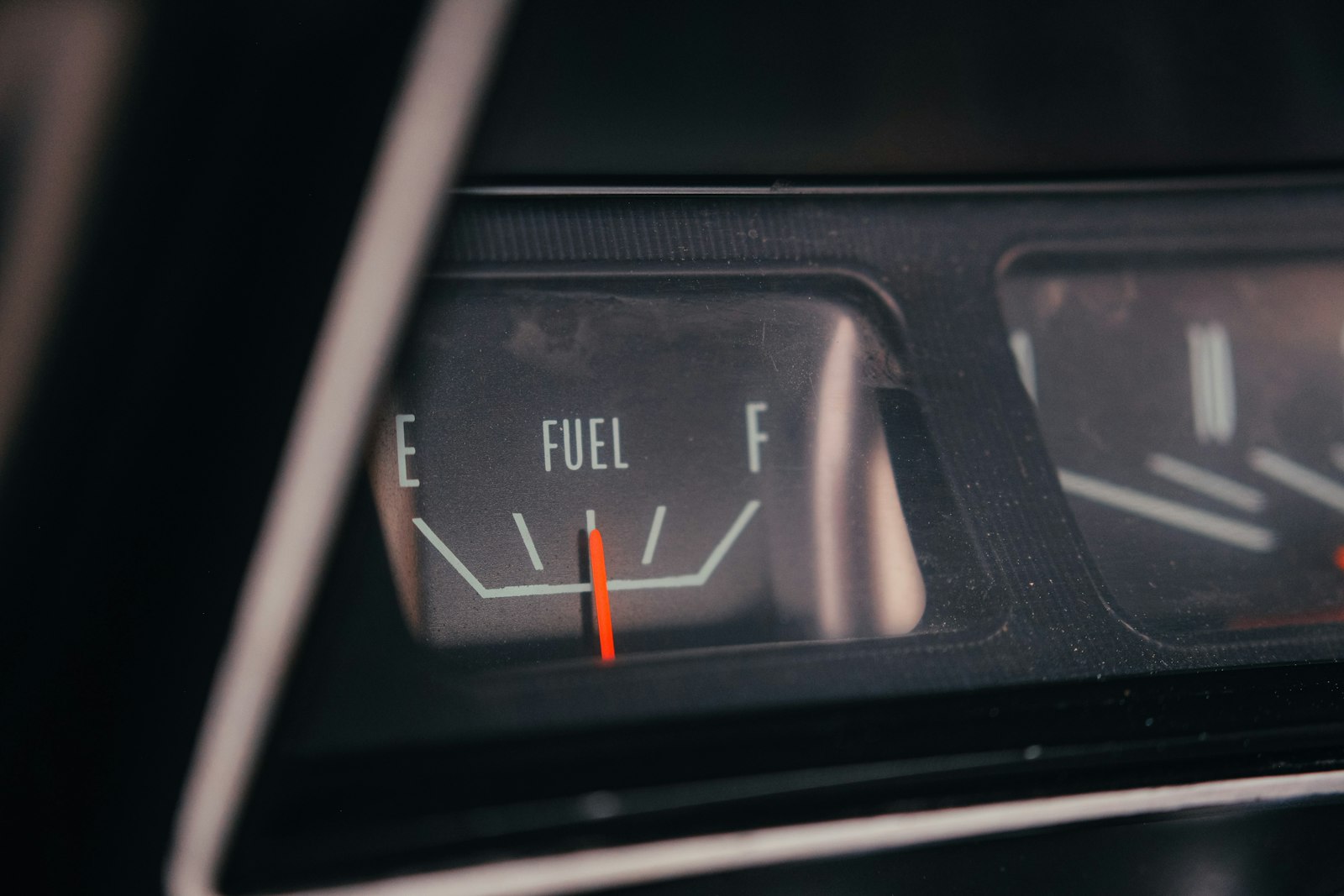
What finally stopped the stolen Mercedes was an empty fuel tank.
Not a remote engine shutdown. Not a tracking service. Not a call to a 24-hour response center. According to the Washington County Sheriff’s Office, the car ran east on U.S. 26 at better than 100 mph with a woman in the passenger seat who did not want to be there, crossed Portland, turned up Highway 30 toward Scappoose, and kept going until it ran out of gas.
Sit with that for a moment. In 2026, a car that may well have shipped with a factory stolen vehicle recovery service was brought to a stop by the same thing that stops a lawnmower.
Buyer’s guide: Best Car Security Cameras in 2026 for Parking and Theft Protection
The technology in that Mercedes did not fail. It was never in the fight. And the reason it was never in the fight tells you more about how the industry actually builds connected-car security than any product page will.
What deputies say happened
Deputies were working a Labor Day weekend impaired-driving mission at about 2:45 a.m. on Friday, September 4, when one of them saw two vehicles moving west on Highway 26 near Southwest Murray Boulevard at high speed. When the deputy caught up, the driver of a white Audi was trying to flag him down and point at a black Mercedes ahead. The Mercedes accelerated away.
The deputy stopped the Audi and learned why it was there. The people inside were chasing their own friend. The Mercedes had just been taken outside a Portland bar with her still in the car.
Deputies found the Mercedes again, still traveling over 100 mph, now heading east toward Portland. The pursuit ran through the city and back out Highway 30 toward Scappoose before the car ran out of fuel. The passenger was found uninjured. She told deputies she had tried to call for help and that the driver took her phone away and kept going.
Tyrone Thompson, 27, of Gresham was arrested and booked into the Washington County Jail on charges including kidnapping in the second degree, unauthorized use of a motor vehicle, possession of a stolen vehicle, attempting to elude, reckless driving, reckless endangering and criminal mischief. He has not been convicted of anything; these are allegations.
One more detail from that same release, because it frames everything that follows: during the whole enforcement mission, deputies made 448 traffic stops and found eight impaired drivers. The only reason a patrol car was sitting on that stretch of 26 at a quarter to three in the morning is that somebody had scheduled a DUII mission for the holiday weekend. The interception was luck.
The Mercedes may have had stolen vehicle recovery. It would not have mattered.
The sheriff’s office did not say what model or year the Mercedes was, and that matters less than you would expect. An older one has no telematics at all. A newer one almost certainly does, and the newer one is the more interesting case, because Mercedes-Benz publishes exactly how its system works.
In the United States, the relevant feature is listed in the company’s own Mercedes me connect service overview as Stolen-Vehicle Location Assistance. Read the name again. Location. Not interdiction, not immobilization, not slowdown. The system’s job is to tell somebody where the car is.
And it does not do that on its own. Mercedes-Benz’s own stolen-vehicle service documentation lays out the sequence: the customer files a police report, then calls the response center, and the response center wants the case number, the officer’s badge number, the officer’s name and the department’s contact information before a specialist starts relaying position data to a 911 center.
Now put that procedure on the timeline of what happened outside that bar. The owner has seconds, not hours. Their friend is in the car. There is no case number yet because there is no report yet, and there is no report yet because the theft is still in progress. The chain of custody the service depends on cannot exist during the only window when the service would change the outcome.
So the owner did the only thing available. They got in an Audi and chased. That is not a failure of judgment. In that moment, a car and a pair of headlights were a faster theft-response system than a global automaker’s security infrastructure, and the timeline proves it: the Audi was the reason a deputy ever learned a person was inside that Mercedes.
There is a second detail buried in that service overview worth flagging for anyone shopping a used Mercedes. The stolen-vehicle service carries a one-year term beginning with model year 2022, after which it continues through the connect store. A security feature that lapses is a security feature most owners will discover has lapsed on the worst possible night. This is now normal across the industry, and it is worth knowing before you assume the badge on the trunk comes with a safety net.
Nobody switches off a car doing 100 mph
General Motors is the manufacturer that comes closest to the thing everyone assumes already exists. OnStar Stolen Vehicle Assistance includes a remote slowdown function, and GM is careful about how it describes it: once law enforcement has confirmed the vehicle is stolen, and when it is safe, advisors work with police to slow the car down.
Two conditions, and both of them are doing heavy lifting. Law enforcement has to have confirmed the theft, which means the paperwork problem again. And it has to be safe, which is a judgment made remotely by somebody who cannot see the road.
That caution is not corporate timidity. It is engineering. Cutting an engine at triple-digit speed is not a soft landing. Power brake assist is drawn from engine vacuum or an engine-driven pump on most vehicles, and electrically assisted racks still depend on a charging system that stops charging when the engine stops. Kill the engine mid-corner at 100 mph with a person in the passenger seat and you have not ended a pursuit, you have converted it into a crash with heavier controls. Which is why GM’s system reduces power rather than shutting anything off, and why the feature is gated behind conditions that almost never exist during an active pursuit.
The companion feature is even more revealing. Remote Ignition Block prevents a thief from restarting the vehicle after it has been shut off. It is a genuinely useful tool for the far more common theft, the one where a car disappears from a driveway overnight and turns up in a lot three days later. It does nothing at all for a car that is already running and is not going to stop.
That is the shape of the entire product category. Connected anti-theft systems are designed for a car that has already been stolen and parked. Almost nothing on the market is designed for the hour in between, which is the only hour that is actually dangerous to human beings.
Federal rules govern starting a car, not leaving one running
The sheriff’s office did not say how the Mercedes was taken, and absent a charging document that says otherwise, nobody should assume. But it is worth understanding what federal law does and does not require of a car sitting outside a bar at 2:45 in the morning, because the answer surprises most owners.
The governing standard is FMVSS No. 114, Theft Protection and Rollaway Prevention. It defines a “key” broadly enough to cover a fob, describing it as a physical device or an electronic code that enables the operator to activate the engine. And it requires that when the key is removed, the vehicle prevents normal activation of the engine.
Activation. Starting. The standard has nothing to say about an engine that is already running. It requires an audible warning when a key is left in the starting system and the driver’s door opens, and that requirement expressly stops applying once the key has been withdrawn. In a push-button car, the fob walking away in somebody’s pocket is the key being withdrawn. The engine keeps turning, the doors are unlocked from the inside, and the federal safety standard has been fully satisfied.
Regulators noticed this a long time ago. In December 2011, NHTSA published a proposed rule under docket NHTSA-2011-0174 that would have required an external audible alert when a keyless vehicle is stationary, the propulsion system is active, and the fob leaves the car. The proposed alert was 85 decibels at one meter. Its duration was one second.
One second. That was the ambition. The agency also acknowledged that some manufacturers already build automatic shutoff timers, typically in the fifteen-to-thirty-minute range, and declined to require them, reasoning that no single interval fits every legitimate case for leaving an engine idling.
Fifteen years later, read FMVSS 114 as it stands today and none of it is there. No walk-away alert. No shutoff requirement. The rule that governs whether your car can be driven away by a stranger was written for a metal key in a barrel, and it has never been updated for the fact that the key is now a radio. We have covered what that radio actually broadcasts, and what organized crews have learned to do with it.
The woman in the passenger seat is why anyone could chase at all
Here is the part that gets lost in a story like this, and it is the most consequential thing in it.
Police pursuit policy in this country has moved decisively away from chasing people over property. Portland Police Bureau’s own Directive 0630.05 authorizes a pursuit when there is reasonable suspicion of a felony person crime, when the driving behavior itself already places the public in immediate danger of serious injury or death, or under a pre-planned mission. A stolen car, standing alone, is not on that list. The directive tells officers to weigh whether the benefit of catching the suspect clearly outweighs the risk of chasing them, and the bureau has decided in advance that for a car, usually it does not.
That is a defensible policy. Pursuits hurt people, and the crash numbers coming out of agencies that still chase aggressively make the case better than any critic could.
But look at what it means on the night in question. Strip the passenger out of this incident and you have a stolen Mercedes on a freeway. In much of the Portland metro that is a case number, a BOLO, and a call to an insurer. The car probably turns up days later, stripped or burned, and the ugly downstream work of titles, VINs and claims begins.
Put a human being in the passenger seat and the legal character of the event changes completely. Under ORS 163.225, kidnapping in the second degree is a Class B felony, committed when a person intending to substantially interfere with another’s personal liberty takes them from one place to another without consent. That is a felony person crime. That is what justifies a pursuit at 100 mph through a city at three in the morning.
So the single most important variable in the entire incident, legally and tactically, was the presence of a person in the car. And it is the one variable the vehicle itself had no ability to detect or report.
Modern cars know a startling amount about their occupants. They weigh you for airbag deployment. They know whether your belt is buckled. They know if a rear door was opened before a trip. They know, and in some cases sell, where you have been and how you drove getting there. Not one of those signals is wired to the one question that mattered on Highway 26: is the person behind the wheel supposed to be there, and is somebody else in this car against their will?
What is worth remembering
Everything that actually worked that night was analog.
A friend in an Audi drove fast enough to keep the Mercedes in sight. A deputy who happened to be parked on the right stretch of highway for an unrelated assignment noticed someone waving at him. Somebody stayed with the car until the engine quit for the oldest reason an engine quits. Three humans and a fuel tank.
The industry has spent twenty years wiring cars into a permanent cellular connection and selling the result as security. What it has actually built is a recovery service with a billing relationship attached, and recovery is a fundamentally different product from prevention or interdiction. Recovery cares about a car. The thing worth caring about on Highway 26 was a passenger, and no part of the system was pointed at her. This is not the first time the low-tech evidence has done the work the high-tech system was supposed to do.
There is a practical takeaway for owners, and it is unglamorous. Know whether your vehicle’s stolen-vehicle service is still active, because on most recent cars it is a subscription with an expiration date. Know the phone number before you need it. Understand that the service will ask you for a police case number and an officer’s badge number, which means the realistic play is to call the police first and the automaker second. And understand that nothing in the car is going to stop it once it is moving.
Your car can tell an advertiser where you bought coffee. It cannot tell a deputy that the person driving it is not you.
Until that changes, the most reliable anti-theft device in a modern automobile remains the fuel gauge, and it only works after everything else has already gone wrong.
Should more cars be required to have real anti-theft tracking built in? Let us know in the comments.