
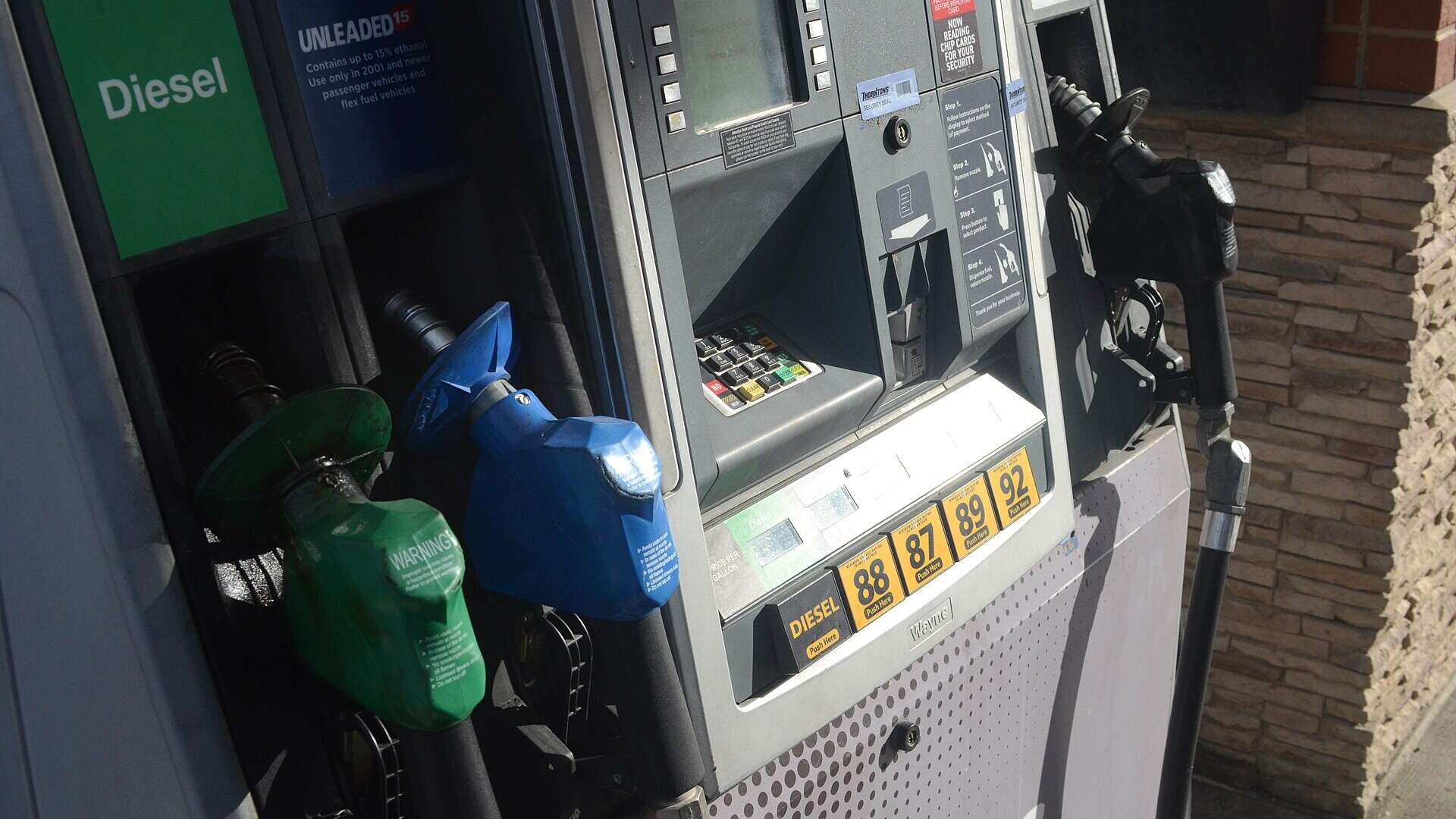
Diesel averaged $6.18 a gallon in the week of Oct. 12, according to the Energy Information Administration, up $2.51 from a year earlier. Regular gasoline was $4.33, up $1.27. Over roughly the same stretch, artificial intelligence became the reason American employers cite most often when they announce layoffs.
Add those to the debt figures in The Auto Wire’s report this morning on car loans and the Fed’s new family-finance survey, and the cost of driving stops looking like one bad bill. For most working Americans the car is how they get to the paycheck that covers everything else, which makes it the hardest expense to cut. Fuel, job security and credit are all moving against the people who depend on it most, and they are moving at once. Nothing in the data below says the economy is collapsing. All of it says the margin for a family that has to drive to work has gotten very thin, and that it is thinnest for those who started with the least.
Diesel is up 69 percent in a year, and the government expects it to stay above $6 this month
By The Auto Wire’s math from the EIA’s weekly figures, diesel is up 68.6 percent from a year ago and regular gasoline 41.5 percent. The agency’s Oct. 6 outlook ties the run-up to supply disruptions in the Middle East. Brent crude averaged $114 a barrel in September, $23 more than in August. East Coast distillate inventories, the tanks that hold diesel and heating oil, were 32 percent below their five-year seasonal average in September, and the EIA expects them to stay 20 to 30 percent below normal through the winter.
The EIA expects diesel to stay above $6 in October and to average about $4.50 in 2027. Its forecast has regular gasoline averaging $3.91 for all of 2026, up from $3.10 in 2025, and $3.56 in 2027. Most of the relief in that forecast arrives next year.
Here is what that does to ordinary driving, by The Auto Wire’s math at the Oct. 12 prices. A car that covers 12,000 miles a year at 25 mpg burns 480 gallons. At $4.33 that costs about $2,080 a year, roughly $610 more than at last October’s price, or close to $12 extra every week. A three-quarter-ton diesel pickup that covers 20,000 miles at 15 mpg costs about $3,350 more to fuel than it did a year ago. That truck belongs to the plumber, the electrician, the landscaper and the farmer, and the extra money comes out of their margins or goes onto your invoice. And as The Auto Wire has reported, a ban on diesel exports aimed at that price could push some of the pressure onto gasoline instead.
AI tops the layoff list while hiring stalls
Outplacement firm Challenger, Gray & Christmas, which tracks announced job cuts, said in its Oct. 1 report that employers have cited artificial intelligence in 120,136 announced cuts so far this year, about 21 percent of the total. That makes AI the leading reason for 2026, ahead of market and economic conditions at 114,124, according to the firm’s full report. Automakers and suppliers have announced 19,423 cuts this year, slightly fewer than the 20,784 at this point in 2025.
The total number of announced cuts is down. Challenger counted 573,195 through September, 39 percent fewer than in the first nine months of 2025. Fewer people are being laid off. The ones who are have very few places to land. The Bureau of Labor Statistics’ September jobs report showed employers added 29,000 jobs. July was revised to a loss of 10,000, and the average over the prior 12 months was 45,000 a month. The unemployment rate was 4.2 percent, or 7.1 million people, and 1.9 million of them, 27.1 percent, had been out of work for 27 weeks or longer.
Workers see it. In the New York Fed’s September Survey of Consumer Expectations, respondents put their odds of finding a new job if they lost the one they have at 46.1 percent. That was a small improvement; in December the same measure hit what the bank called a new series low of 43.1 percent. September’s survey also found more households saying they were worse off than a year ago, and more expecting to be worse off a year from now. Andy Challenger, the firm’s chief revenue officer, listed what employers are weighing: “Employers are facing high energy costs, an uncertain war in Iran, a rate hike that could make hiring more expensive,” along with rising health care costs.
A $673 car payment, $173 a month in gas and a repair bill up 5.8 percent
Stack those numbers on a household that is already stretched. The Federal Reserve’s Survey of Consumer Finances found 19.6 percent of families were late on at least one loan payment in the prior year. A subprime borrower financing an average used car at Experian’s second-quarter rate of 19.10 percent pays about $673 a month over 68 months, by The Auto Wire’s math. At October’s pump price, the 12,000-mile driver above spends another $173 a month on gasoline. That is about $846 a month before insurance, registration or a single repair, and the BLS says motor vehicle maintenance and repair cost 5.8 percent more in September than a year earlier.
Insurance is the lone line moving the right way, down 5.0 percent over the same year, as The Auto Wire detailed in its breakdown of the September CPI. Replacing the car is no escape hatch either, with the average new-vehicle price above $50,000.
The New York Fed’s survey also asks people how likely they are to miss a minimum debt payment in the next three months. In September the average answer was 12.2 percent, down from 13.2 percent in August and well off the 15.3 percent reading in December, which the bank said was the highest since April 2020. A worker who loses a job in a month when employers added 29,000 jobs, carrying a 19 percent car loan and paying $4.33 for gas, does not have many months of cushion before the lender calls, and without the car the next job gets harder to reach.
Four reports that will show whether the squeeze tightens
The EIA’s weekly fuel update on Oct. 20 is the first check on whether diesel holds above $6, as the agency expects for October. The next BLS jobs report will show whether July’s lost jobs were a blip or a turn, and Challenger’s October count will show whether AI keeps its spot at the top of the layoff reasons. The New York Fed’s third-quarter household debt report will show whether auto delinquencies climbed through a summer of rising fuel prices. If the Federal Reserve does raise rates, the possibility Challenger flagged, auto loan APRs tend to follow.
The EIA’s forecast counts on Middle East supply recovering and diesel falling toward $4.50 next year. Is this an oil shock that drivers can ride out until 2027, or the start of a longer squeeze on everyone who has to drive to work?