
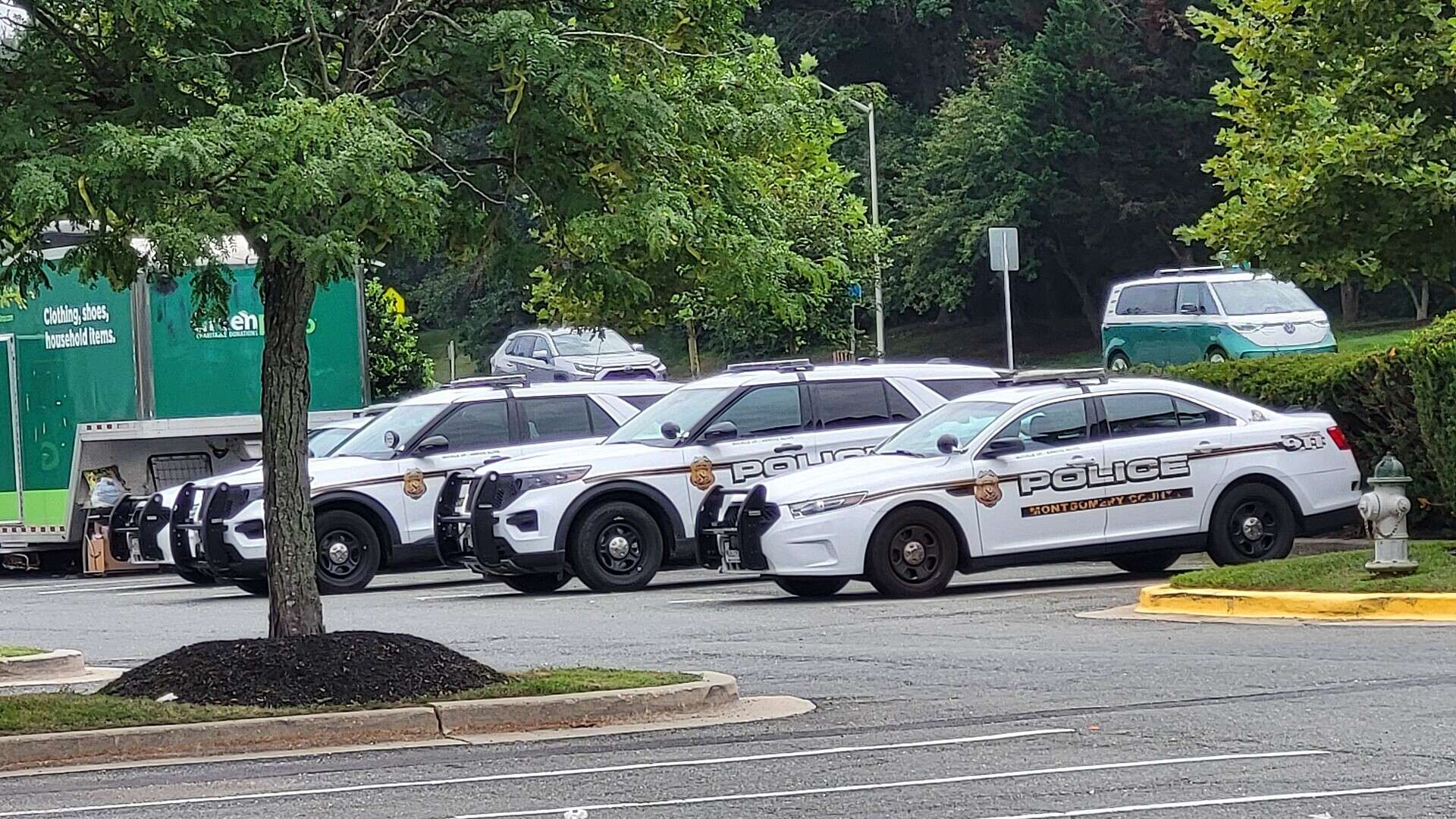
The Montgomery County Council voted 11-0 on Oct. 20 to make street takeovers a county offense with a maximum fine of $5,000, five times the county’s usual ceiling for that class of offense. The provision in Bill 27-26 that will reach more drivers is a single subsection near the end, which lets county police take possession of a car used in a violation and have it towed and stored.
On the same afternoon, by the same 11-0 margin, the council passed Bill 17-26, which lets the county point its existing speed cameras at state highways it has been barred from enforcing. Read together, the two bills say the same thing about how Maryland’s most populous county plans to police its roads: put the consequence on the car, because there are not enough traffic stops to put it on the driver.
What the takeover bill does, and what it no longer does
Councilmember Andrew Friedson introduced the bill on June 16 with co-sponsors Marilyn Balcombe, Sidney Katz and Dawn Luedtke. It adds a new section to the county code covering races, speed contests, exhibition driving, stunt driving and street takeovers, which the bill defines as coordinated gatherings that intentionally disrupt traffic for burnouts, drifting, doughnuts and similar maneuvers.
As introduced, the first prohibition made it a county offense to take part in any of those things on a public road. That provision is gone. At the Oct. 5 Public Safety Committee worksession, Friedson and Luedtke moved to delete it after the County Attorney’s office warned that it duplicated state law and could be struck down as preempted. The committee agreed, 2-0 with one abstention, according to the council staff packet for the final vote.
What is left goes after everyone around the car: the flagger, the starter, the timekeeper, the person who organizes or promotes the event, anyone who helps stage it, and anyone who stays put after police order a crowd to disperse. A violation is a Class A violation that may be punished as a misdemeanor. County code normally caps Class A fines at $1,000. The committee amendment overrides that cap and sets $5,000, which the staff memo describes as the most the council is allowed to set under state law.
The person doing doughnuts in the intersection is still covered mainly by state law. Maryland’s 2024 exhibition-driving law, signed May 9, 2024, created a state offense for driving near a crowd in a way that intentionally produces two or more listed effects, such as squealing tires or wheels leaving the pavement. It carries up to 60 days in jail and a $1,000 fine, or up to a year if someone is seriously hurt. It also carries 8 points, the same as a racing conviction on a highway.
Under the MVA’s point system, 8 points within two years brings a Notice of Suspension. One conviction for exhibition driving puts a driver there by itself, before any fine. For a 19-year-old who needs a license to get to work, that is a bigger penalty than anything a county ordinance can write.
The county’s own research points at the car
Montgomery’s Office of Legislative Oversight went looking for evidence that local spectator and organizer laws work. It found one study, from San Diego in 2006. That study found no evidence the city’s spectator ordinance did anything. The one factor that did show an effect was San Diego’s vehicle forfeiture ordinance.
Montgomery’s bill stops short of forfeiture. The car can be seized, towed and stored under existing law, and the owner gets it back by paying. The county’s budget office expects the program to cover its own costs through those retrieval payments, auctions of cars nobody claims, and state administrative flags on unpaid vehicles, and says it could make money. That is a lighter tool than San Diego’s, but it lands in the right place. A tow and storage bill is paid by whoever owns the car, whether that is the driver or a parent who lent it out, and it comes due when the owner wants the car back, not months later after a court date.
The Auto Wire covered a CHP 30-day seizure of a street-racing GT-R this month; there, too, the hold on the car was the penalty that landed first.
Fewer than 40 stops a year
The reason the car matters more than the fine is in the numbers OLO pulled for its racial equity review. From January 2012 through July 2026, Montgomery County police made 535 traffic stops for racing or exhibition driving. OLO put it at fewer than 40 stops a year, and the stops were concentrated in Glenmont and Wheaton, Gaithersburg and Montgomery Village, and Aspen Hill.
A $5,000 ceiling is a sentence a judge may impose on the few people police manage to identify and charge. A takeover crowd can easily outnumber the officers who respond. OLO’s review cited a Feb. 24, 2026, television report of a takeover crowd in Silver Spring damaging police cruisers. In that setting, officers are not writing individual citations. Seizing a specific car does not depend on writing tickets in the middle of a crowd, though the bill does not spell out how police will use the power.
The same data shows what critics will watch. Latino residents made up 37.6% of those 535 stops and about 21% of the county’s population. OLO rated the bill’s equity impact indeterminate and recommended engaging affected communities and developing annual reporting; the staff packets do not show that recommendation adopted. Public testimony at the July 14 hearing was all in favor, though some supporters asked for an explicit exemption for protests and other protected assemblies. Patch reported that an amendment from Councilmember Kristin Mink aimed at protecting First Amendment activity was not included in the final bill. The bill also covers only highways and roadways, not the commercial and industrial parking lots some witnesses said have hosted takeovers.
States can stack criminal charges on takeover drivers, as Georgia is doing in the Norcross case where troopers say an 18-year-old ran at 145 mph. A county cannot. Its tools are fines it can raise to the state ceiling and cars it can tow.

Cameras move to the roads where people die
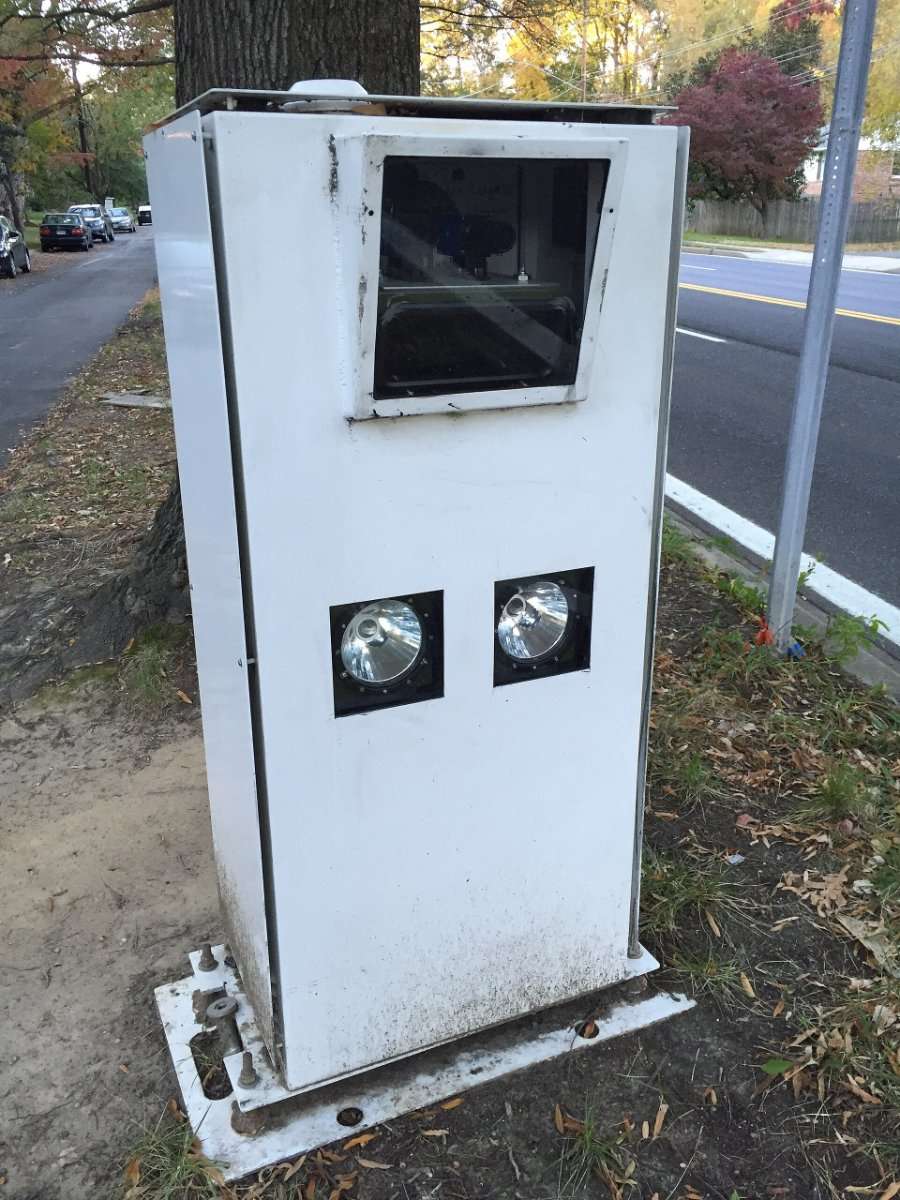
Bill 17-26, requested by County Executive Marc Elrich, does not add a single camera. According to testimony from Assistant Chief Administrative Officer Earl Stoddard, the county runs 216 automated enforcement devices: 76 red-light cameras, 38 fixed pole speed cameras mostly in school zones, 96 portable units and six trailer units. Until now, county law let speed cameras operate only on residential roads posted at 35 mph or less and in school zones within a half-mile of a school.
The introduction packet lays out why that rule missed the worst roads. The county’s Vision Zero plan identifies 100 miles of high-injury roadway, and 60 of those miles were off-limits to speed cameras under state law. Stoddard told the council that high-injury corridors make up about 3% of county roads and account for 41% of serious and fatal crashes. A 2025 state law, HB 1173, let counties use cameras on highways their safety plans list as high risk for deadly and serious-injury crashes. Bill 17-26 adopts that authority, with interstates, expressways and other controlled-access roads excluded.
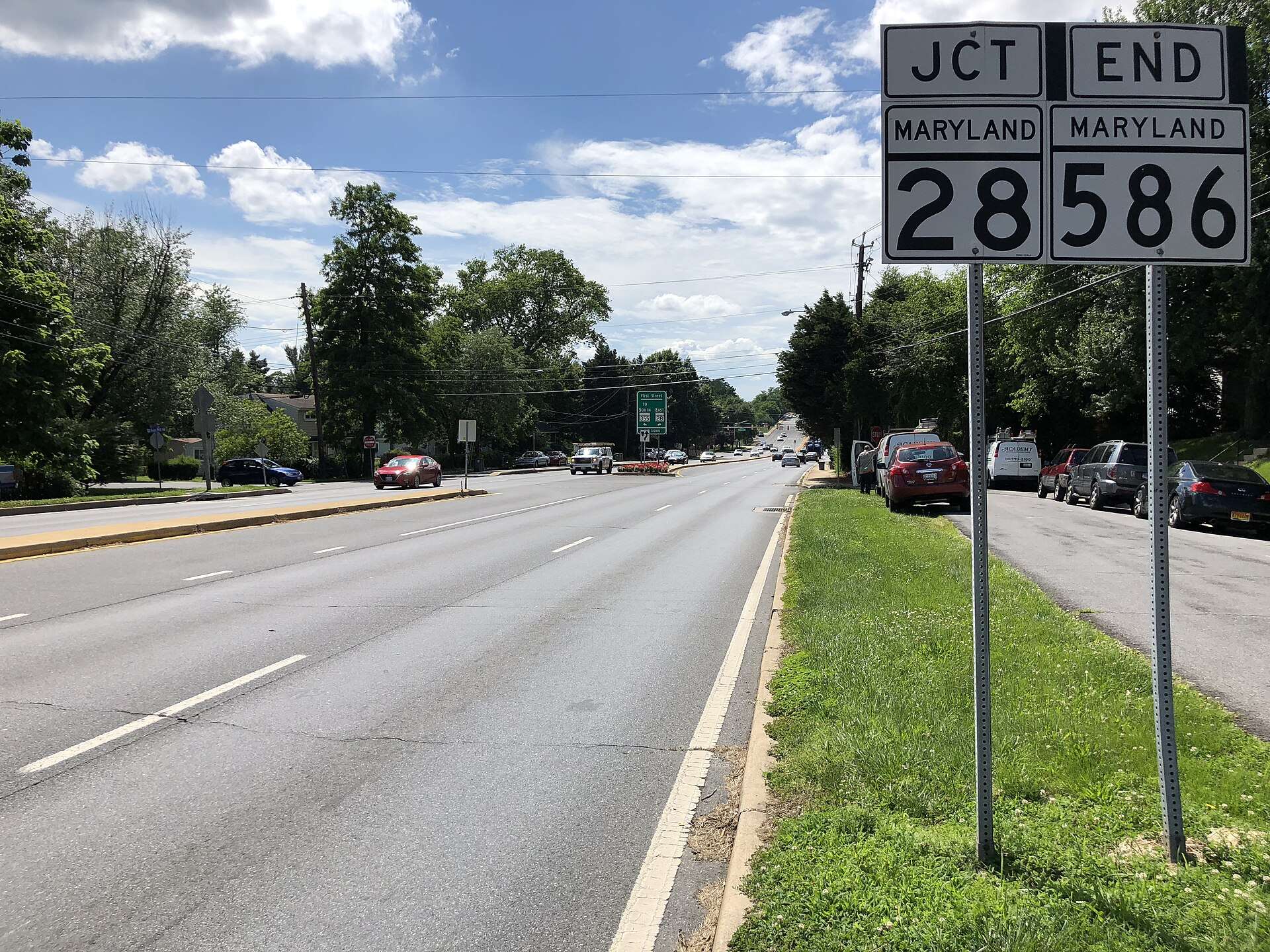
The candidate list in the executive’s August memo reads like a map of the county’s busiest arterials: Georgia Avenue on both its MD 97 and US 29 stretches, Veirs Mill Road from Connecticut Avenue to Twinbrook Parkway, University Boulevard East, New Hampshire Avenue, Frederick Road between Middlebrook Road and the Gaithersburg line, Clopper Road, Spencerville Road and Piney Branch Road. Most are state highways. The memo says the police department and the State Highway Administration are ready to issue permits and publish locations once the law takes effect, and the committee made the bill expedited, so it takes effect as soon as it becomes law.

Drivers on those roads will meet a different fine schedule than the one Montgomery’s cameras were built around. Since October 2025, Maryland’s camera penalties scale with speed: $40 for 12 to 15 mph over, $70 for 16 to 19, $120 for 20 to 29, $230 for 30 to 39 and $425 for 40 or more. The county treats a camera ticket as a civil violation similar to a parking ticket, mailed to the registered owner, as its police payment page explains. That is the same logic as the tow: the car’s owner gets the bill.
Per-camera revenue falls as drivers adapt
The county’s budget office calls the bill enabling legislation with no direct fiscal impact, and Stoddard told the council it is not a revenue measure. The office’s own averages from fiscal 2015 through 2024 show why the question keeps coming up: each speed camera brought in $177,513 a year in fines against $95,344 in expenses, a net of $82,169. The office also notes that revenue is highest in a camera’s first few years and falls as drivers learn where it is, and that the new higher fines could push more drivers to contest tickets in court, where the fine goes to the court system instead of the county.
If the new corridor cameras follow that curve, falling revenue will mean drivers are slowing down; a corridor camera whose take stays flat for years would mean they are not. The safety case in the council packet rests largely on a 2016 Insurance Institute for Highway Safety evaluation of Montgomery’s own program, which found a 39% drop in the likelihood that a crash on camera-eligible roads produced an incapacitating or fatal injury. The Tacoma program The Auto Wire examined this week shows what happens when a city captures far more violations than it can process.
Bill 17-26 also lets the executive adopt, by executive order, any future speed-camera authority the General Assembly grants under the state camera statute, without returning to the council. The next expansion of where cameras can go in Montgomery County may not get a council vote at all. Tom Dishler, who testified against the bill at its June 16 hearing, asked the council to require public reporting on tickets, revenue and crash outcomes. The committee packets show no reporting requirement added.
Corridor orders and tow counts come next
For Bill 17-26, the first sign will be the executive order naming corridors and the published camera locations on Georgia Avenue and Veirs Mill Road. For Bill 27-26, it is whether police use the tow provision at the next takeover, and whether the county starts reporting how many cars it seizes. If the county tows dozens of cars and the takeovers move to Prince George’s County, which passed its own law this year, or to private lots the bill does not reach, the $5,000 fine will have mattered less than the hook on the back of a wrecker.
If a takeover rolled through your neighborhood, which would stop the next one faster: a $5,000 fine for the organizers, or a tow truck hauling the car to the impound lot?