
Kenosha said in August that it was finished with Flock Safety’s license plate cameras. The city then approved a 10-year, $14.6 million technology contract with Axon that, according to a petition filed at the Wisconsin Supreme Court on Oct. 14, includes hundreds of thousands of dollars to replace the Flock cameras with Axon hardware. For someone driving through Kenosha, the logo on the pole changed. The rules for what police can do with a record of where that person’s car has been did not.
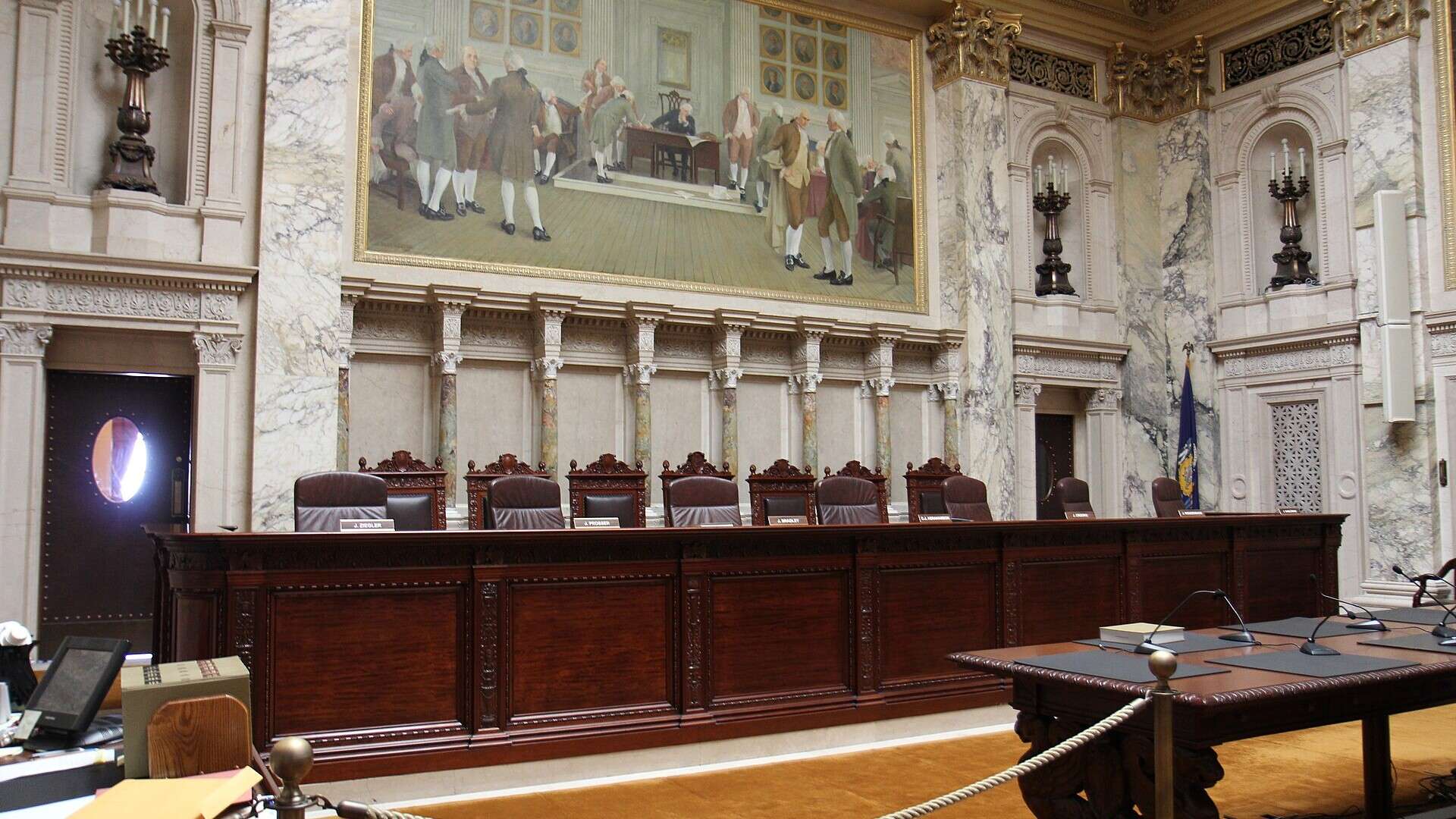
That gap is what the petition goes after. The ACLU of Wisconsin and the Electronic Frontier Foundation filed it for the Wisconsin Council of Churches and Green Bay pastor Melissa Pagel against the cities of Milwaukee, Green Bay, Racine and Kenosha. It asks the justices a single question: when police query a plate-reader database to see where a vehicle has been, is that a “search” under Article I, Section 11 of the Wisconsin Constitution? A yes would attach a warrant requirement to the data itself, no matter which company made the camera or how many times a city changes suppliers.
What the church council wants Wisconsin’s justices to declare
The petition does not ask the court to take down a single camera or cancel a contract. It asks for a declaratory judgment that accessing, querying or analyzing historical plate data is a search, and that doing it without a warrant violates the state constitution unless a recognized exception, such as genuine exigent circumstances, applies. ACLU staff attorney Wes Haslam told FOX 11 in Green Bay that the goal is a judge in the loop: “We don’t want law enforcement entities being able to self-police.”
The council, which says it represents more than 2,000 congregations, built its case around what happens inside church buildings on weeknights. The petition lists 12-step meetings such as Alcoholics Anonymous and Narcotics Anonymous, confidential pastoral counseling, mental health support groups, domestic violence survivor meetings and immigration legal aid clinics. The people attending those meetings drive there and park outside, and a camera on the nearest arterial logs every one of those cars. The petition calls the cameras “inescapable surveillance chokepoints.”
Flock told FOX 11 that its cameras take still images of vehicles in public, do not use facial recognition and do not identify occupants. The company said more than 45 courts have found that fixed plate readers do not violate the Fourth Amendment, and that it supports clear legislation with accountability and oversight. Green Bay declined to comment on pending litigation, the station reported, and Wisconsin Public Radio reported that city officials had not commented.
A plate reader records the whole car, not just the plate
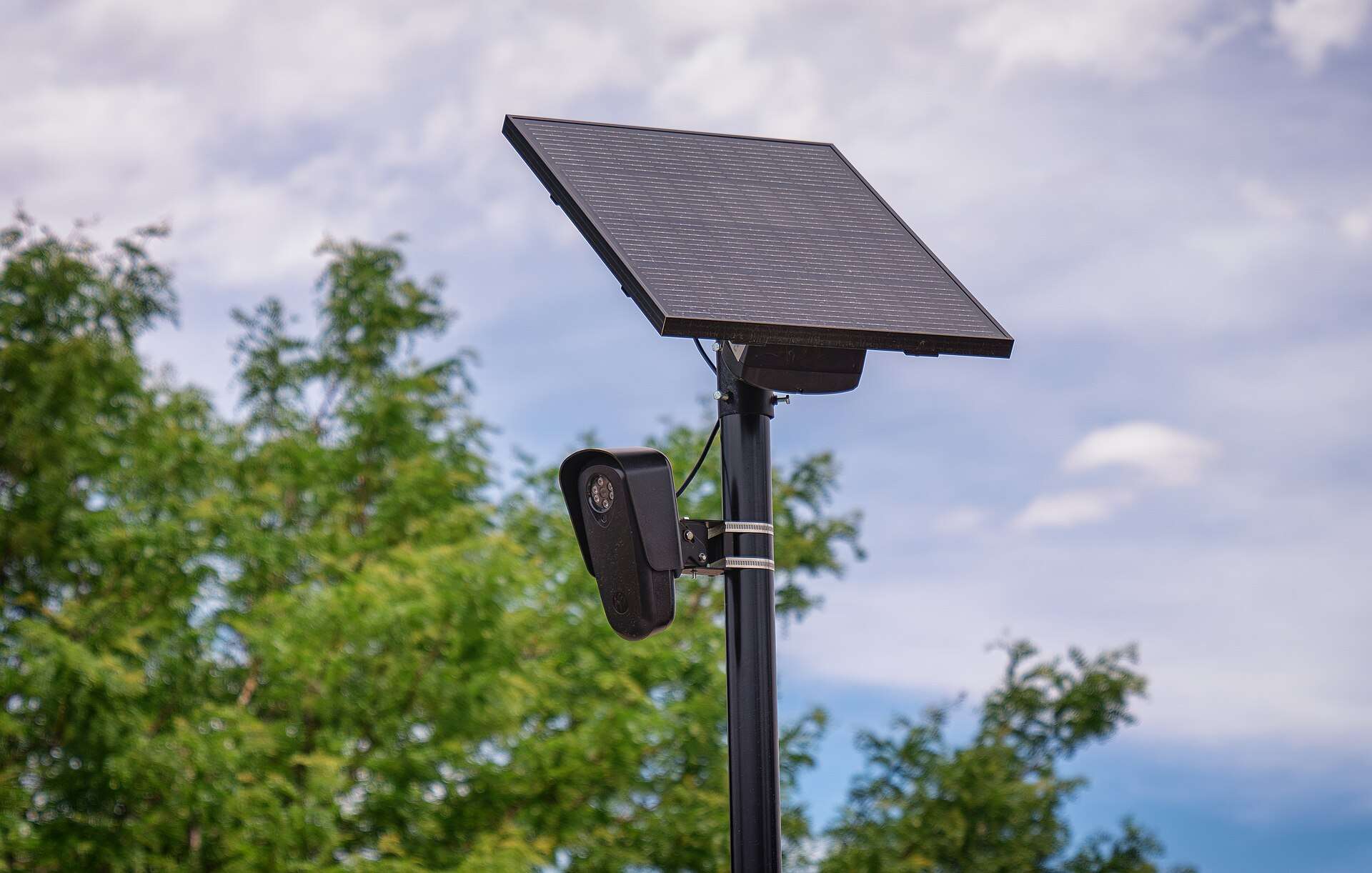

The name undersells the equipment. According to the petition, each capture records precise location, date, time and direction of travel, along with an image of the entire vehicle, often showing the driver, visible passengers and details such as bumper stickers, scratches and roof racks. Flock’s own FAQ describes capturing more than the plate, and the petition says the company markets an AI tool called FreeForm that lets officers search captured images with plain-language descriptions. Officers can search by full plate, partial plate, location and time window, or vehicle features, the petition says.
For an owner, that changes what counts as identifying information. The roof box you bolted on for a road trip, the dealer sticker you never peeled off, the crease in the rear bumper from a parking lot mishap: all of it is the kind of detail that makes one silver crossover distinguishable from ten thousand others, and all of it lands in the database alongside the plate.
The petition’s numbers from Green Bay show the volume. The city runs about 46 Flock cameras plus Axon mobile and in-car readers, keeps a searchable 30-day archive, and shares access with 299 outside agencies. From Jan. 1 through Feb. 7, 2026, its system recorded 9,447,030 vehicles. That is 38 days, or roughly 249,000 captures a day by The Auto Wire’s math. The petition does not say how many distinct cars that represents; a commuter who passes the same camera twice a day shows up twice.
Milwaukee runs three platforms, Flock, Axon and Genetec. Its officers ran 715 searches on Flock alone between Aug. 19 and Sept. 17, 2026, and the most common “offense type” selected as the reason was “Other,” according to records in the petition’s appendix. Milwaukee stopped sharing its own camera data with outside agencies, but the petition says it still draws on data from more than 800 other jurisdictions. At a Sept. 17 public meeting, police chief of staff Heather Hough said, as quoted in the petition, that the “technology has been advancing faster than we can grasp. And so, unfortunately, we’re doing a lot of catch-up.” In early October, the department renewed its Flock contract.
The misuse cases behind the petition
The petition lists Wisconsin cases from the past two years. Milwaukee officer Josue Ayala pleaded guilty after running 179 searches on his romantic partner and her ex within two months; the searches came to light in December 2025 after a victim looked up a plate on HaveIBeenFlocked.com. The Internal Affairs detective assigned to investigate Ayala, Tehrangi Chapman, was placed on leave and criminally charged in July 2026 after investigators said he used the network to track a woman. A Menasha officer, Cristian Morales, was sentenced in August 2026; according to an investigator’s affidavit cited in the petition, he used the searches to check whether his then-girlfriend had gone to a clinic about a possible pregnancy termination. Charges were filed the same month against a Kenosha County deputy accused of tracking a fellow deputy he was dating.
Errors count too. In July 2026, Milwaukee officers stopped a woman at gunpoint after a plate-reader alert on a vehicle that, the petition says, never should have been entered into the system. Ten days later, Brookfield police stopped her at gunpoint over the same alert. A bad hotlist entry follows a car across city lines the same way legitimate data does.
Wisconsin cities changed vendors and policies, not the search standard
Cities have responded to the backlash, and the petition argues each response left the core power untouched. Kenosha moved to Axon. Racine voted in September not to renew Flock while signaling it would look at other vendors. Milwaukee’s mayor limited Flock queries in August to supervisors and certain crimes, cut off outside access and launched a public stats portal, then extended those limits to all plate-reader technology in September. The University of Wisconsin–Madison police dropped their Flock contract in July but kept cruiser-mounted readers. Dane County’s board stripped $80,000 for the sheriff’s Flock subscription, which the petition notes would not stop a zero-dollar agreement to query the broader Flock network.
The petition’s blunt claim is that no government plate-reader user in Wisconsin requires officers to obtain a warrant before searching a vehicle’s location history. Tempe, Ariz., shows a version of the same problem: Tempe’s city attorney said police could still get plate-reader data after the city’s ban. Policies written around a vendor or a device leave a side door. A constitutional rule about the query does not care whose server the data sits on.
Conservatives filed a similar case first, under federal law
The ACLU is not alone. On Sept. 10, the conservative Wisconsin Institute for Law & Liberty sued 11 Waukesha County cities and villages plus the county itself in Waukesha County Circuit Court on behalf of the group NoCams Muskego and local residents. That suit argues warrantless searches of the Flock database violate the Fourth Amendment. WILL president Rick Esenberg said, “Our lawsuit will not result in their removal or the end of their use.” WPR reported that the complaint counts more than 120 Flock cameras in the county and says other agencies ran searches that included Muskego’s cameras more than 900,000 times between July 25 and Aug. 24.
The choice of constitution matters. Because WILL’s claim is federal, the municipalities moved the case to federal court on Oct. 7, FOX6 reported, and asked a judge to pause it while the Seventh Circuit decides an Illinois case. Sam Hall, an attorney for the municipalities, told the station that the cameras are not “following a person into the grocery store, or their church, or their home.” The ACLU’s petition rests on the Wisconsin Constitution, and the Wisconsin Supreme Court has the final word on what that document means. The U.S. Supreme Court does not review a state ruling that rests on independent state-law grounds.
The hurdle is that Wisconsin’s court usually reads Article I, Section 11 in step with the Fourth Amendment, which the petition acknowledges. So it argues both that federal law is a floor the state can rise above and that federal law has already moved in its direction. On June 29, the U.S. Supreme Court ruled in Chatrie v. United States that obtaining a person’s Google Location History was a Fourth Amendment search, even over a short period and even though Google held the data; it sent the question of whether the warrant was valid back to the lower court. We wrote then about what that could mean for plate readers. On Oct. 1, a federal judge in Oklahoma held that a retrospective plate-reader search was a search requiring a warrant, and a similar question is now before the Fifth Circuit. Flock’s count of 45-plus favorable rulings concerns fixed readers; the petition’s argument targets the retrospective query of an aggregated, multi-agency archive.
What the Wisconsin Supreme Court decides first
Nothing happens until the court agrees to hear the case as an original action, skipping the circuit courts entirely. Under its own precedent, it does that for questions of public right that need a prompt, authoritative answer. The petitioners argue that a circuit court ruling would bind only the parties, that plate readers track cars across municipal lines, and that the facts about how the systems work are not in dispute, so there is nothing for a trial court to find. If the justices decline, the question goes back to the slow, city-by-city path the petition warns about, with WILL’s federal case and the Seventh Circuit moving on their own clock.
If the court takes the case and rules for the churches, the cameras would keep shooting every car that passes. What would change is the step after: a detective wanting to know where your car was last Tuesday would need a judge to sign off first, in Green Bay and in every other Wisconsin city that runs these systems, whichever vendor’s name is on the invoice. Retention would still matter, too. Green Bay keeps 30 days online, and the petition notes that records an agency downloads can be kept indefinitely, a gap federal retention proposals have also tried to address.
Should police need a judge’s signature before pulling up where your car has been, even if the cameras stay on the poles?