
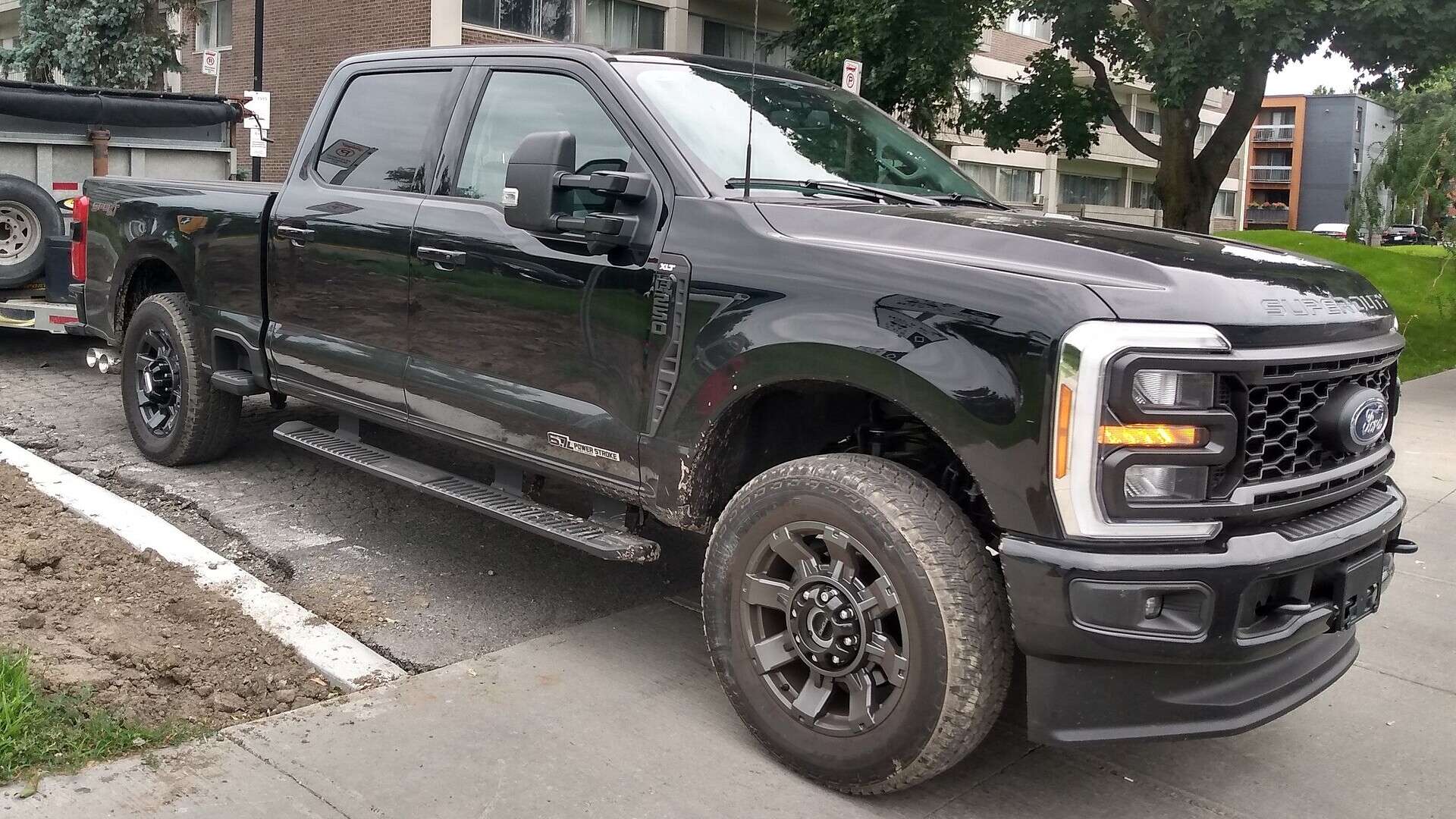
Roy “Mack” Irwin’s 2023 Ford F-250 was in Park when it started moving on June 18, 2024, according to the lawyer for his family, and a Ring camera in a New Braunfels, Texas, subdivision recorded it. The 79-year-old had driven there to pick up items for a church function. The truck rocked back and forth, his passenger reached for the wheel and couldn’t stop it, and Irwin was run over as he tried to climb back in. He died of his injuries.
His daughter, Shelby Lane Reynolds, sued Ford Motor Co., Bluebonnet Ford and Northwest Automotive Warehouse in Bexar County district court. The case was set for trial the week of Oct. 12. It won’t get one. Ford and Bluebonnet told the court on July 31 that they had settled, and the terms are confidential, the San Antonio Express-News reported on Oct. 15.
A confidential settlement is the family’s call, and nothing in the record suggests they should have made a different one. It does mean the one proceeding built to find out what moved that truck ended without anyone having to say. What’s left in public for people driving 2023 Super Duty pickups is an allegation and a 2023 axle recall that shows how a truck can sit in Park and still roll. Add a federal rollaway standard that stops short of the heavier F-250s. The part of the system an owner fully controls is the parking brake.
What the lawsuit claimed and what it never had to prove
Attorney Jeff Wigington described the video to KENS 5 in January 2025. “You can see the truck moving back and forth three times,” he said. He was also plain that the cause was still an open question: “The determination of the specific cause of those movements will have to be done throughout the course of this litigation, through testing that’s ultimately completed.” Ford told the station it doesn’t comment on pending litigation.
According to the Express-News, the suit alleged a known park-to-reverse and rollaway defect covered by a recall Irwin didn’t know about. I was not able to review the petition, and the published accounts don’t line up neatly: KENS 5 reported when the suit was filed that there had been no recalls for the 2023 model tied to the transmission complaints Wigington cited. With the case settled, the test results and expert reports that would have been argued in front of a Bexar County jury are unlikely to become public.
It’s the second Ford pickup wrongful-death case on our desk this month. In Georgia, a family is asking a jury to decide whether a lifted F-150 crossed a legal line the state’s law barely draws.
Ford’s 2023 park-pawl recall didn’t cover a single Super Duty
Ford did file a 2023 recall for transmissions that can show Park without holding the vehicle. Recall 23V-070, submitted to NHTSA on Feb. 10, 2023, covered 10-speed automatics that could contain a loose extra bolt, left behind during re-assembly at the plant, that can block the park pawl from engaging while the shifter reads Park. Ford opened its investigation after two 2023 Broncos rolled forward at the assembly plant with the selector in Park.
That campaign covered 944 vehicles: 297 F-150s, 27 Mustangs, 396 Explorers, 195 Broncos and 29 Lincoln Aviators. There is no F-250 or F-350 on the list.
The 2023 F-250 recall that can defeat Park sits in the rear axle
Six months later, on Aug. 25, 2023, Ford filed recall 23V-595 (Ford’s number is 23S49) for 41,555 2023 F-250 and F-350 pickups with single rear wheels and the 10.5-inch rear axle, built from March 20 through Aug. 21, 2023. That’s 36,333 F-250s and 5,222 F-350s, and Ford estimated half of them carried the defect. Maintenance workers at supplier Mid-West Forge Corp. in Cleveland had entered an incorrect offset value into one of its two induction heat-treating machines, so some left rear axle shafts didn’t complete the hardening process. Two shafts returned to Ford failed its torsional-yield and case-depth specs and broke about 44 millimeters from the flange. It is the same category of supplier process slip behind Ford’s recent Bronco recall.
The connection to Park is mechanical. The park pawl is a steel tooth that drops into a notched gear on the transmission output and stops that shaft from turning. It does nothing else. For that lock to reach the pavement, the driveshaft, the differential and both axle shafts have to be intact. With the pinion held still in an open rear differential, the two rear wheels can only turn in opposite directions, which on the ground means they can’t turn at all. Snap the left shaft and its side gear spins free, which lets the right wheel roll. Ford’s filing says a fractured shaft can cause an inability to hold the vehicle in Park and, if the parking brake isn’t applied, unintended movement. Ford reported no known accidents or injuries from the condition at the time.
Owner letters for 23V-595 were scheduled to go out Oct. 16 to 20, 2023, about eight months before Irwin’s death. Nothing I found in the public record says whether his truck was built inside that window, whether the recall applied to it, or whether an axle shaft had anything to do with what happened in New Braunfels. The recall shows how a Super Duty can read Park and still roll. It doesn’t explain this case.
Federal rollaway rules stop at 10,000 pounds
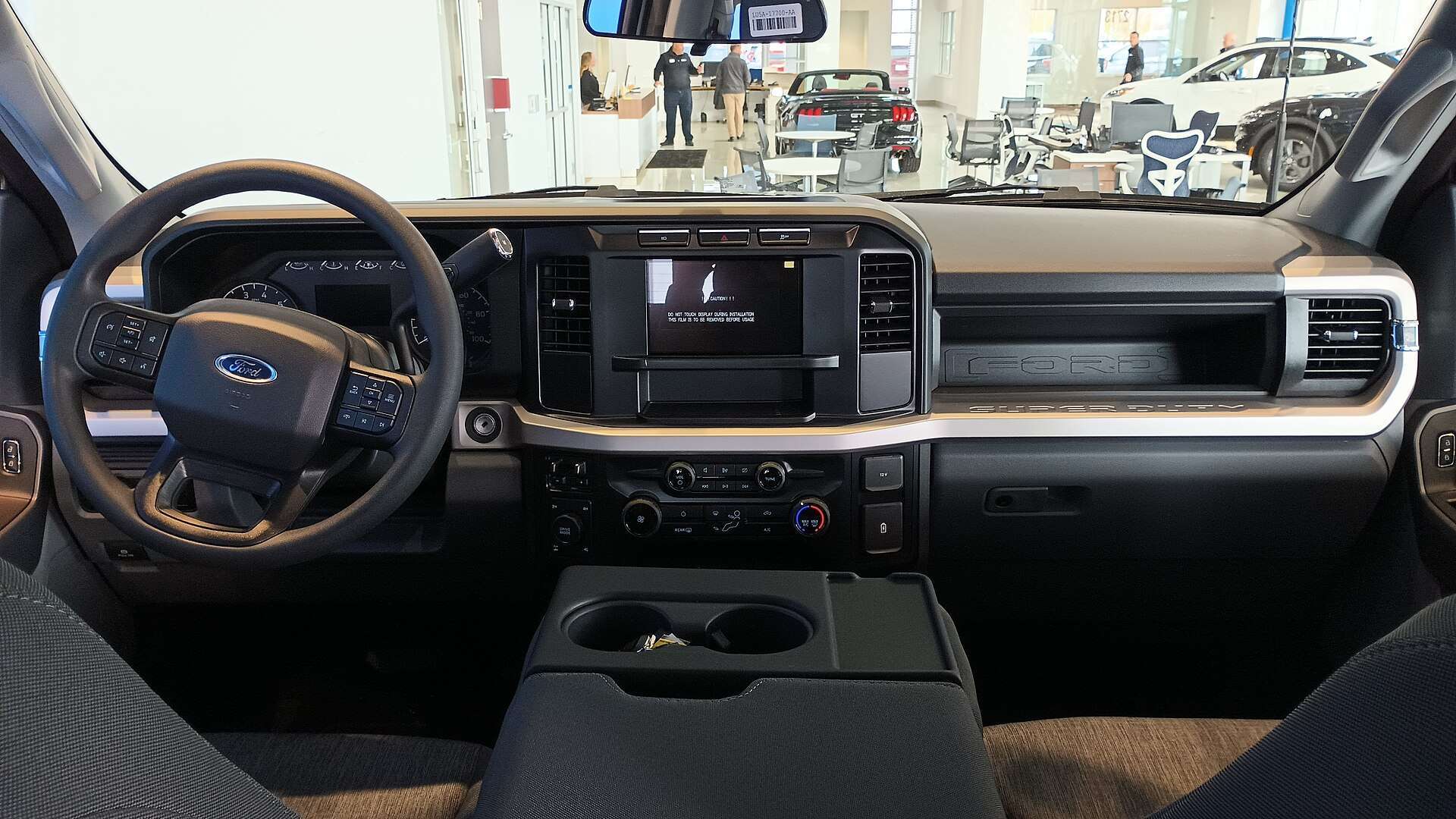
Federal Motor Vehicle Safety Standard 114 exists, in the regulation’s words, to “decrease the likelihood that a vehicle is stolen, or accidentally set in motion.” It requires that the key can’t be removed unless the transmission is locked in Park, and for vehicles built on or after Sept. 1, 2010, it requires a brake-transmission shift interlock, so the driver has to press the brake pedal before the shifter can leave Park. The standard covers trucks with a gross vehicle weight rating of 10,000 pounds or less.
Ford’s 2023 towing guide lists F-250 GVWRs from 10,000 pounds up to 11,400 pounds, depending on cab, box, drivetrain and engine. An F-250 rated above 10,000 pounds sits outside FMVSS 114. Nothing in the records I reviewed says those heavier trucks are built with less rollaway protection than the lighter ones. It does mean there is no federal rollaway test they have to pass, and owners are relying on Ford’s engineering and nothing underneath it.
Ford’s park-to-reverse case in the 1980s also ended with letters
NHTSA’s earlier investigation of Ford “park-to-reverse” incidents, in which Ford automatics were alleged to slip from Park into Reverse, ended in a settlement that leaned on warning letters to owners instead of a mechanical fix. When the General Accounting Office, now the Government Accountability Office, reviewed NHTSA’s handling of it in a report released Aug. 1, 1985, it found the agency tracked complaint rates after the settlement but not whether owners had actually installed the warning labels. Reported incidents fell every year after the settlement. Fatalities fell in the first year and then rose overall in later years.
Recall letters miss a large share of owners
Whatever moved Irwin’s truck, the suit’s claim about a recall he never knew about lands on a weakness NHTSA documented in an April 2026 report to Congress. Vehicle-only recalls launched from 2012 through 2022 reached a weighted average completion rate of 65.8 percent. Automakers have to mail first-class letters to registered owners within 60 days of notifying NHTSA, mostly to addresses bought from state DMV records through data aggregators. One manufacturer estimated that around 45 percent of owners with open recalls might not have been receiving the notices. In older campaigns, up to 30 percent of unrepaired vehicles changed owners or addresses each year. Federal law bars a dealer from selling a new vehicle with an open recall; it doesn’t bar selling a used one.
The same report recommends certified mail, in-vehicle alerts and electronic notices, and the agency held a meeting this fall to collect ideas. For now the first-class letter is still the main way a recall reaches a pickup sitting in a driveway.
How 2023 Super Duty owners can check their trucks
Enter the 17-character VIN at NHTSA’s recall lookup. It lists open campaigns for that specific truck, including 23V-595 if it applies. Ford told NHTSA the affected trucks weren’t built in VIN order, so a build date on the door sticker won’t settle the question. Dealers read a Julian date stamped on the left rear axle flange and replace shafts with a suspect date code at no charge, and Ford’s recall line is 1-866-436-7332. Our roundup of recent recalls covers other campaigns from the past two months.
Ford lists rear axle noise and a loss of drive in two-wheel drive as the warning signs. Its filing also says three warranty reports described trucks that could still move in four-wheel drive after the shaft broke, which means a 4×4 owner can keep driving on a fractured axle without knowing it.
Then set the parking brake every time you leave the truck, level driveway included. It holds the rear wheels directly, downstream of the transmission, the differential and the axle shafts, and Ford’s own recall filing names it as the thing that keeps a truck with a broken shaft from moving.
Reynolds’ settlement keeps its terms private, and that was hers to decide. Should automakers be able to settle wrongful-death cases over alleged defects on confidential terms, or should what the testing found be made public for every other owner of the same truck?