
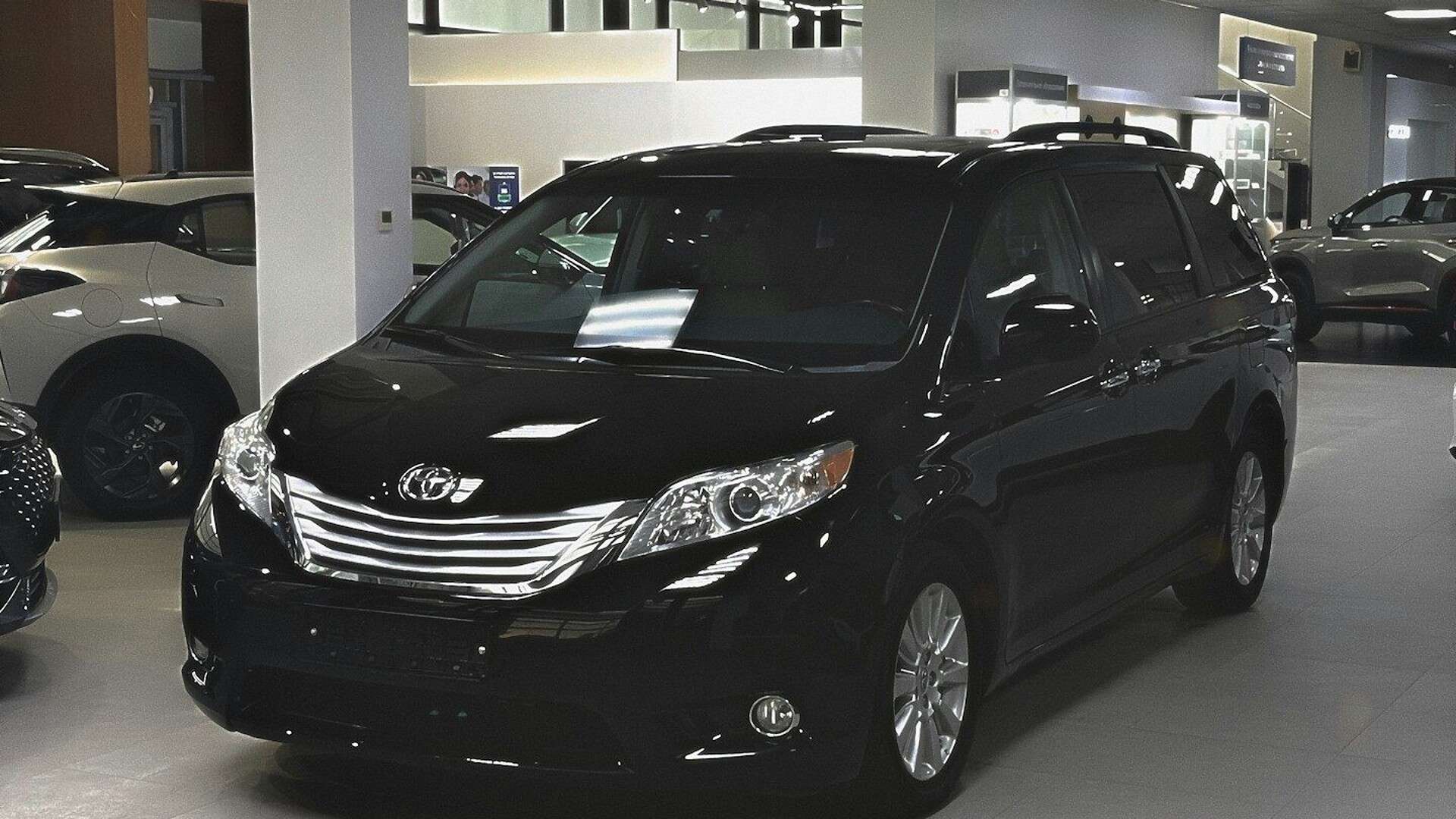
The second-row captain’s chairs are the reason many families buy a Sienna. You slide them back, flip up the ottomans, and the kids ride in business class. Toyota now says those chairs have a flaw you would never notice on the school run. It only shows up during the fraction of a second when the seat matters most.
Toyota has filed a safety recall covering 228,367 Sienna Hybrid minivans from the 2022 through 2026 model years, all seven-passenger versions, according to NHTSA’s campaign 26V690 record. The agency’s summary says the second-row seat backs “may fail to remain secured in the event of a crash.” Every Sienna sold since the 2021 redesign has been a hybrid, so “Sienna Hybrid” here effectively means any current-generation Sienna with captain’s chairs.
The bug is in the seat, the fix is in the airbag computer
NHTSA files this defect under the seat recliner, the toothed locking mechanism that holds the backrest at the angle you chose. For nearly every affected van, though, the remedy leaves the recliner alone. Dealers will update the software in the supplemental restraint system electronic control unit, which is the module that decides when airbags and belt pretensioners fire.
Related Articles
- Musk Likes a Tesla-SpaceX Merger. Then He Admitted It Needs a Majority of ALL Tesla Shares, Not Just Votes Cast
- Alleged Cartel Car Pipeline: 13 Charged in El Paso, and 11 Are U.S. Citizens
On seven-seat Siennas, the second-row belts are built into the seats instead of anchored to the body. When the system fires a pretensioner to yank the belt tight, that load goes through the seat frame and its recliner, not through a pillar. Since the fix lives in the restraint module, the most plausible reading is that Toyota is changing how and when that force arrives, so the recliner isn’t hit at its weakest moment. That’s inference. NHTSA’s record doesn’t explain the mechanism, and I found nothing from Toyota that does.
There is one exception. Vans equipped with Toyota’s Mobility as a Service (MaaS) package get both second-row seat backs replaced. Whatever is different about those seats, a software change evidently wasn’t enough to cover it.
What the paperwork tells owners
The NHTSA record contains a few details worth knowing:
- No over-the-air fix. The campaign is flagged as not an OTA update, so every van needs a dealer visit.
- No park order. Toyota hasn’t told owners to stop driving.
- Two notice codes. The recall carries Toyota numbers 26TB24 and 26TA24. Under Toyota’s numbering, the “TB” code marks an interim notice and “TA” marks the remedy notice, the same split used on a Highlander seat recall earlier this year.
- Letters go out December 7, 2026. You don’t have to wait for yours. Owners can call Toyota at 1-800-331-4331.
A pattern in the back half of the van
On its own this would be a tidy software recall. It isn’t on its own. This is at least the fourth Sienna campaign involving seating or belts in this generation:
- 2021: a belt D-ring defect in 2,259 eight-passenger 2022 vans.
- February 2025: 167,802 Siennas from 2021 to 2025 recalled for loose seatback bolts in the third row.
- October 2025: roughly 54,600 2025 models recalled for improperly welded rails under the second-row seats. In that case, Toyota told owners not to put anyone, or any child seat, in the second row until the repair was done.
Then in March, Toyota recalled about 555,000 2021 to 2024 Highlanders because second-row recliners may not lock after adjustment. The root causes all differ: a belt part, bolt torque, weld settings, springs, and now restraint timing. The location doesn’t. The second row is where child seats go, and it keeps generating paperwork.
What to do if you own or shop for one
Check your VIN now. Use NHTSA’s lookup or Toyota’s. A 2025 Sienna could be covered by both the weld campaign and this one. Getting new rails does not clear you here, and the reverse is also true.
Bundle the visit. A software flash is a short job. If you have a seven-seater that’s due for service, schedule both together, and keep the repair order showing the 26TA24 completion.
Related Articles
- Porsche Center-Lock Recall Grows: Lead and Bismuth Blamed for Cracking Wheel Parts
- Tesla Owner Says He Couldn’t Find the Door Release After a Head-On Crash and Fire, Then NHTSA Denied His Petition and Promised a Rulemaking
Know what the filing does and doesn’t say. The weld recall came with an explicit “don’t use the second row” warning. NHTSA’s summary for this campaign doesn’t include one. If you’d like to know whether Toyota recommends any interim precautions, ask the dealer directly.
Used buyers, run the VIN before you sign. A used Sienna can carry open campaigns through a trade-in without anyone mentioning them. A completed recall with a dated invoice is a small but real point in a minivan’s favor when you sell it, especially on a vehicle bought mainly for hauling people.
DIYers, take care with seat work. Integrated-belt seats hold a pyrotechnic pretensioner. Anyone pulling a second-row chair to reupholster it, swap it, or retrieve a lost phone should treat it like airbag work. That means disconnecting the battery first and reconnecting everything exactly as it came apart.
Toyota’s fix mostly takes a laptop, not a parts truck. But a four-year-old minivan’s restraint software needed rework. If you own a Sienna, has the second row ever felt even slightly loose?