
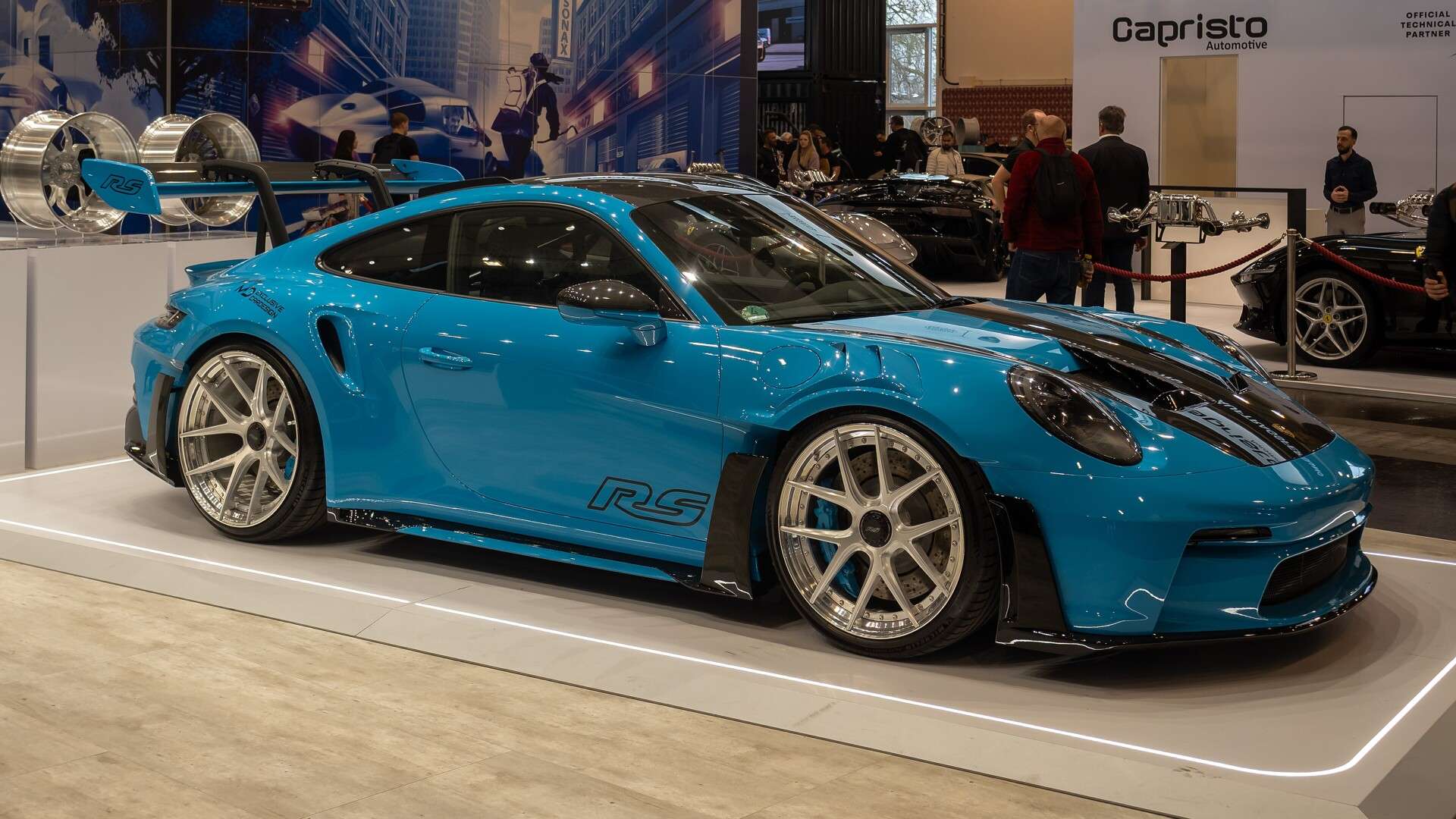
Two years ago, Porsche told about 1,851 owners of 2024 911 and 718 models to park their cars because a batch of center-lock wheel parts might crack. Now 548 more owners are getting the same instruction, and this time the filing explains why the first sweep missed them.
What’s new
Porsche Cars North America submitted recall 26V682 on October 16, 2026, as an expansion of its 2024 campaign. The added cars are all 2024 models:
- 911 Carrera GTS: 168
- 911 Turbo S: 94
- 718 Cayman GT4 RS: 73
- 718 Spyder RS: 70
- 911 GT3: 50
- 911 GT3 RS: 41
- 911 S/T: 39
- 911 Turbo: 13
The advisory is blunt: do not drive. A fractured center-lock part can cost the car a wheel or degrade steering control. Porsche says owners are likely to feel immediate vibration if the part fractures, which is a thin layer of comfort at triple-digit speeds.
Two years later, a cause
When Porsche filed the original 2024 recall on October 28, 2024, it covered 1,851 vehicles and admitted the cause was still under investigation. The new filing names one. Testing of the suspect batch from supplier Hirschvogel found lead and bismuth levels outside specification. The affected component is part number 992601119B.
Related Articles
- Truist’s $5.5 Billion Near-Prime Auto Book Was Breaking Even, So the Bank Sold It and Is Shutting the Lender Down
- GM Backs Off Countersuit in Troy E-Bike Crash as Michigan Liability Questions Mount
Lead and bismuth make steel easier to machine. They also make it weaker, which is why the spec on them is tight. Too much of either in the one part clamping a wheel to a hub, and you’re asking a weak part to survive hard braking and the occasional curb strike. One big fastener carries the entire clamping job on a center-lock wheel. Five-lug wheels spread that load across several fasteners, so one weak bolt is less likely to drop the wheel.
How 548 cars slipped through
This section of the filing is an unusual piece of supply-chain candor. In May and August 2026, Porsche learned of two more field fractures, with no injuries reported. A joint review with the supplier found that previously unidentified material movements in the supplier’s manufacturing and logistics had undermined the original traceability work. Parts from the bad batch had been shipped under delivery notes nobody connected to it in 2024.
Porsche found the extra cars by matching supplier delivery records to component and vehicle build dates. The affected parts went into 911s and 718s built between June 7 and July 19, 2024. The filing’s 1.4% works out to about eight cars out of 548, by The Auto Wire’s math. If yours is one, you lose a wheel. Hence the order for everyone.
The calendar problem
Porsche told dealers on October 20, and VINs became searchable on NHTSA’s site that same day. Owners will be contacted by phone, email, and MyPorsche app notification within one to two weeks, with letters due within 60 days of the filing.
The planned remedy notification date is December 15, 2026. The fix itself is simple: a dealer inspects the center-lock system and replaces any bad parts. Porsche says the remedy is unchanged from 2024 because the suspect parts come from the same batch. So you’re waiting on a calendar, not on engineering. Depending on when you hear from Porsche, that could mean nearly two months without your car.
Related Articles
- GM Earned $3.3 Billion Last Quarter. Its Lending Arm Set Aside 39% More for Car Loans Going Bad
- Former Investigator’s Live Flock Account Exposes Georgia’s License Plate Reader Offboarding Gap
Porsche says it won’t offer reimbursement for repairs done before notification, because every affected car is still under its new-car warranty.
What owners should actually do
- Check your VIN today at NHTSA’s recall lookup. If you bought a 2024 GTS, Turbo, or GT car secondhand, Porsche may not have your current contact information, so don’t assume an email is coming.
- Don’t drive it to the dealer. Ask the dealer or Porsche customer service at 1-800-767-7243 about transport. A recall-related tow beats an uninsurable hub failure.
- Keep it insured while it sits. If you’re tempted to cut coverage on a parked car, ask your insurer about reduced storage coverage rather than dropping it. Garage fires and theft don’t honor stop-drive orders.
- Don’t swap wheels or fasteners yourself to get around the order. Center-lock hardware has specific torque and lubrication procedures. A non-genuine nut on a car with an open safety recall creates warranty and liability problems you don’t want to explain later.
The bigger lesson
Center-lock wheels are race hardware sold to road drivers, who put up with the quirks for faster wheel changes and less rotating mass. In 2024 Porsche recalled and still missed 548 cars, because the supplier’s paperwork couldn’t say where every part from one bad batch went. It took two more cracked parts on customer cars to expose the hole.
Shopping a lightly used 2024 GT or Turbo? Would you walk away from a seller who can’t show you the recall paperwork on the spot?