
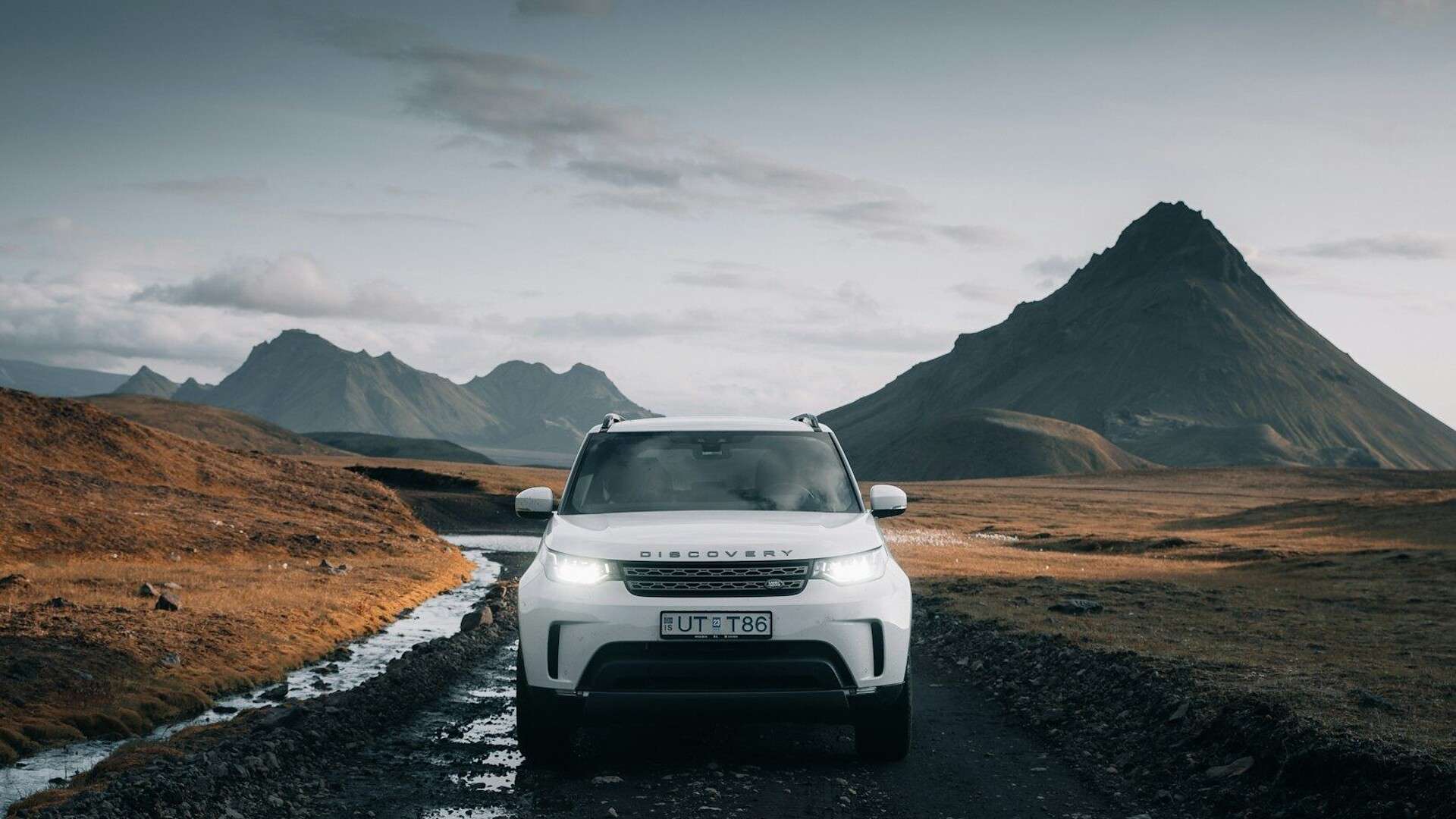
Land Rover sells the full-size Range Rover as the most refined way to cross a flooded field. It turns out the tailgate can’t manage an ordinary rain shower.
Jaguar Land Rover North America has recalled 93,997 Range Rovers from the 2022 through 2026 model years, according to its Part 573 filing with NHTSA. These are trucks built at Solihull between July 8, 2021, and June 4, 2026, which is essentially the entire run of the current-generation Range Rover sold in the U.S. so far. JLR estimates the defect rate at 100 percent. That doesn’t mean every camera will die. It means every truck has the same flawed tailgate design.
Where the water goes
The rearview camera sits in a trim piece on the tailgate. JLR’s filing says the tailgate’s “water management system” may not drain water away from the camera properly. Water pools around the camera mount and, over time, gets inside. The result is a distorted picture on the touchscreen or no picture at all.
The fix is about as low-tech as it gets. Dealers will drill extra drain holes in the underside of the trim that holds the camera, check that the camera works, and replace it if it doesn’t. The repair is free.
Related Articles
- Android Head Units Were Infected Through Their Own Updater, Kaspersky Says
- Washington Deputies Said Friday They Hadn’t Yet Spoken to the 16-Year-Old in an Everett E-Scooter Crash That Left a 5-Year-Old With Life-Threatening Injuries
A detail in the filing explains why the field fix and the factory fix differ. JLR says it corrected the problem on the assembly line by adding a revised seal to that trim piece on June 4, 2026, the same day the recall population ends. Vehicles already built get drainage holes instead of the new seal. The factory keeps water out, while the field repair lets it drain out after it gets in. Both approaches can work, but they aren’t the same repair.
How JLR’s own timeline reads
JLR’s timeline looks like a warranty audit that stumbled into an engineering problem:
- July 31, 2026: JLR’s product safety committee opens an investigation into “anomalous rear camera replacement rates.” Global warranty data showed U.S. and Canadian Range Rovers going through cameras much faster than Range Rovers sold anywhere else.
- September 18, 2026: The committee is told that dealers must now provide evidence before a camera replacement is approved. After that change, the claim rate dropped significantly.
- October 6, 2026: JLR still can’t fully explain why North America differs from other markets. However, the supplier’s teardown of the first batch of returned cameras finds that most of them failed from water ingress.
- October 8, 2026: The recall is ordered, but only for the U.S. and Canada.
Put plainly, JLR suspected some of the camera swaps weren’t needed. It added paperwork, saw claims fall, and then found that the cameras it did examine really were drowning. JLR logged 2,295 U.S. claims and field reports involving camera replacement between August 3, 2022, and September 28, 2026. It reports no crashes, injuries, or fires.
JLR has done this twice before
The problem isn’t new. In July, JLR recalled 15,535 2021–2025 Discoveries for the same drainage problem, with the same drill-and-inspect fix. The Range Rover filing cites that Discovery campaign, D145, as a reason it looked more closely at the bigger SUV.
Before that, in 2024, JLR recalled 58,729 2018–2022 Range Rovers and Range Rover Sports because water could get into the rear camera housing. The fix for that campaign was a new seal. It also stalled partway through. JLR told dealers to stop doing the Range Rover Sport repair because no repair was approved for that model yet.
That’s three generations or model lines with water reaching the rear camera.
The paperwork differs too. The 2024 campaign was filed with NHTSA as an FMVSS 111 issue, the federal rear-visibility standard. The new filing leaves the FMVSS fields blank and treats the problem as a safety defect, not a failure to meet the standard. Owners get the same free repair either way, but the classification changes how the problem is recorded.
What owners and buyers should do
Watch the dates. Dealers are notified October 29, and owner letters go out by December 11. JLR’s numbers for this recall are D171 and NHTSA 26V678. You can check your VIN with NHTSA instead of waiting for the mail.
Related Articles
- Los Angeles Switches On Speed Cameras at $4,450 a Month Apiece, Then Gives Drivers 60 Days of Warnings Before $50 Tickets Start
- Bigger Buttons Won’t Fix Car Touchscreens, UW Driving Research Shows
If the camera already failed, get reimbursed. If you paid out of pocket for a replacement camera, JLR says it is using its general reimbursement plan. Find the invoice.
Don’t let one repair stand in for the other. If your camera was replaced under warranty, you still need the recall repair. A new camera sitting in the same water-trapping trim can fail the same way.
Wash carefully until it’s fixed. Avoid aiming a pressure washer directly at the tailgate camera area until the drain holes are in. If the image gets foggy, don’t keep relying on it. Turn your head and look.
Buyers, check the service history. A used 2022–2026 Range Rover with one or more camera replacements isn’t necessarily a problem truck, since this recall explains why that happened. Confirm that D171 has been completed. Then run the VIN for any other open campaigns.
Did your Range Rover’s camera cloud up under warranty? Did the dealer approve the replacement, or ask you to prove it?