
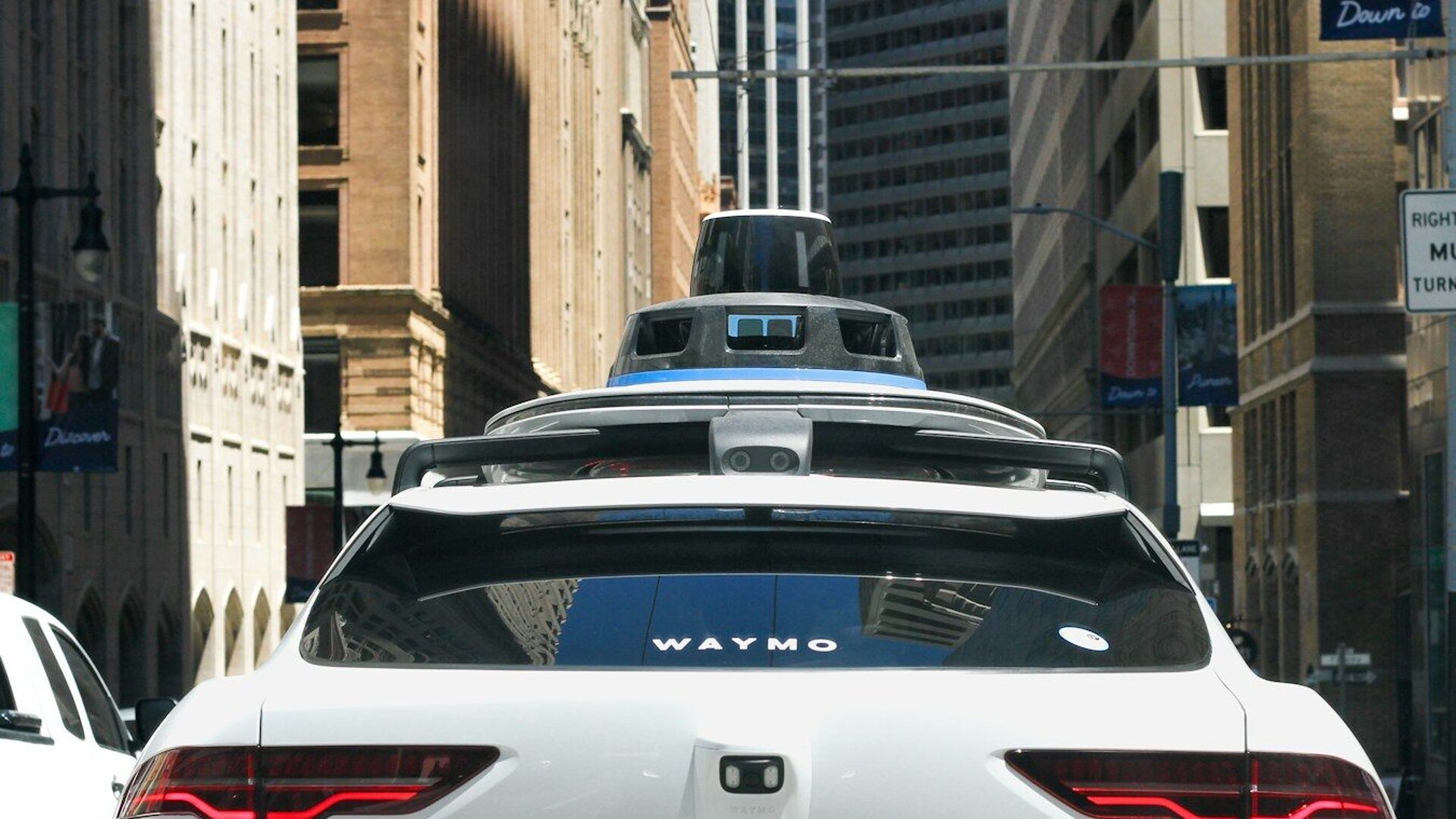
Waymo’s driverless cars are back to surface streets only. California’s Department of Motor Vehicles has barred the company from running driverless vehicles on any freeway in the state, either carrying riders or testing. A few hours after the order became public, Waymo stopped freeway routing in every other market it serves as well.
The DMV didn’t hedge. Spokesperson Jonathan Groveman said in a statement that Waymo’s driverless freeway operations pose an “imminent hazard to public safety due to recurring incursions by its vehicles into active construction zones where construction workers, vehicles and equipment are present.” The restriction took effect November 11 but wasn’t made public until November 17.
What the cars actually did
The DMV pointed to two recent Bay Area incidents. In the first, three Waymo vehicles drove into an active construction closure on U.S. 101 near Burlingame. In the second, a Waymo tried to get past California Highway Patrol cruisers running a traffic break on Interstate 280.
Related Articles
- Waymo Loses California Freeways After Robotaxis Breach Work Zones Again
- Tesla Opens Orders for Its $29,990 Cybercab in Texas, Then Musk Says the $299 Monthly Fee It Needs to Move Is ‘Too High’
The I-280 incident is the scarier one. In a traffic break, officers weave across every lane with their lights on to slow traffic behind them, usually to clear debris or protect a crash scene ahead. A human driver who tries to pass one gets a very personal conversation with the CHP. A robotaxi that tries it didn’t understand what the patrol cars were doing.
This isn’t a first offense. The DMV says the incursions kept happening after restrictions and fixes that followed similar incidents on May 18.
Waymo’s response
Waymo spokesperson Dana Gallagher said no injuries or collisions came from the recent incidents. On the wider pullback, she said: “In alignment with our safety-first principles, we have also temporarily restricted freeway operations across our other operating markets to evaluate our performance.” The company says its surface-street service keeps running at over half a million trips a week. It also says freeway testing will continue with “trained autonomous specialists” on board.
California has no say over Phoenix or Miami, so the nationwide pause was Waymo’s call. A company that saw this as a local mapping glitch probably wouldn’t pull freeways in every city it serves.
Why freeway work zones are so hard
City construction is slow and messy. Freeway construction is fast and messy. Overnight closures go up in minutes, with crash-attenuator trucks, arrow boards and long cone tapers that shift traffic across lanes and contradict the painted lines. At 65 mph, a car has very little time to accept that the cones outrank both the map and the painted lines. Waymo relies heavily on detailed pre-built maps. A freeway closure is exactly where that map is most confidently wrong.
Own a car with lane-centering? Work zones are where those systems struggle too, which is why the manual tells you to take over in them.
The legal tool regulators used
This is the first big test of the AV rules California adopted on April 28. Under the old 2018 framework, the DMV basically had two choices: suspend a permit or revoke it. That’s what happened to Cruise in October 2023, when the DMV shut down its whole driverless operation. The updated rules add graduated operational restrictions: smaller fleets, shorter hours, a mandatory safety driver, or a smaller operational design domain. Banning freeways is that last option, a surgical cut instead of a full shutdown.
Related Articles
- 506 Fairfax Workers Face a Layoff of Undefined Length While GM Retools Kansas City for the Gas Equinox
- Georgia Turo Host Says His $100,000 Hellcat Came Back With More Than $27,000 in Damage, Then Turo Paid Under $5,000
The same rules spell out how Waymo gets back on. The company has to send the DMV data proving the problem is fixed. The DMV says the restriction stays until Waymo “demonstrates to the Department that it has taken effective corrective actions.” That includes evidence that its cars can detect and respond to construction zones and emergency vehicles. No timeline was given.
The new framework also lets police issue a notice of noncompliance to the manufacturer when a driverless car breaks traffic law. That means any future I-280 stunt comes with paperwork that goes straight to Sacramento.
A second high-speed miss this year
This is Waymo’s second high-speed-road software problem this year. In May, the company recalled 3,791 vehicles with its fifth- and sixth-generation driving systems. In an April 20 incident, a robotaxi slowed but didn’t stop for a flooded road with a 40 mph limit. Floodwater and cones are different problems, but they have the same weak spot: the car notices something unusual and doesn’t respond decisively enough at speed.
For riders, the practical cost is time. Freeways are how robotaxis get to airports and run long trips down the Peninsula, so for now those rides go back to surface streets, if they’re offered at all. Hundreds of millions of city miles didn’t prepare it for a CHP traffic break at 65. Once Waymo is allowed back on the freeway, would you ride in one, or are surface streets as far as you’d trust it?