
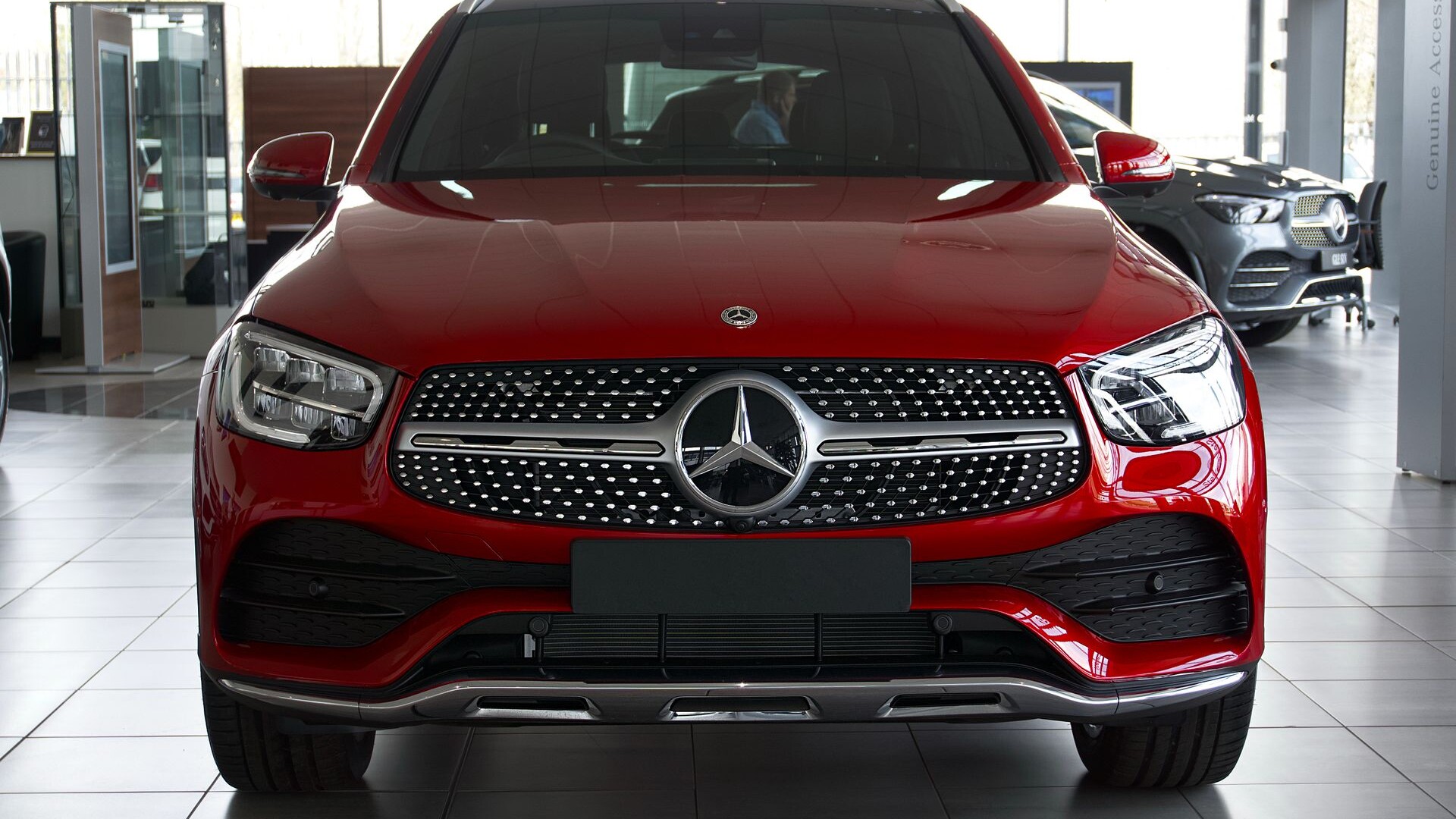
Night-shift workers at the Mercedes-Benz plants in Bremen and Hamburg, Germany, walked out Sunday evening in a 24-hour strike, 10 days after Mercedes told its German workforce it had stopped new investment there and weeks after it pushed its plan to build the GLC in Alabama back to 2030. Bremen is where the GLC and the C-Class come from now.
The strike is about pay for the whole German metal and electrical industry. The investment freeze is about where Mercedes builds its next generation of cars. For anyone shopping a C-Class or GLC in the U.S., the second fight matters far more than the first, because the plants Mercedes keeps holding up as cheaper alternatives to Germany sit inside the European Union, and a car built anywhere in the EU pays the same 15% when it lands at an American port.
Bremen and Hamburg went dark Sunday night
IG Metall, Germany’s largest union, called more than 23,000 workers at 19 sites in northern Germany out on Monday’s strike, Euronews reported, with the walkouts at Mercedes in Bremen and Hamburg starting as Sunday’s night shifts began. Citing the German public broadcaster’s Tagesschau, Euronews said the lines at the Hamburg plant had been idle since 10 p.m. Sunday. The union’s northern district then called 24-hour strikes at 22 more plants for Tuesday, including several Airbus sites, dpa-AFX reported.
The Telegraph reported that the action puts at risk production of up to 10 Mercedes models at Bremen, including the C-Class sedan and GLC SUV, along with parts supplies from Hamburg, in a story published Sunday. Mercedes’ own count is higher. A May 6 company release says Bremen builds 11 models, seven of them nowhere else: the EQE, the C-Class sedan and wagon, the CLE coupe and convertible, the GLC, GLC Coupe and electric GLC, the Mercedes-AMG SL and GT, and the Mercedes-Maybach SL.
The same release explains why Hamburg matters to Bremen. The electric GLC’s electric axles and other key powertrain parts come from the Hamburg plant, and the electric GLC shares one line with the gas and hybrid GLCs and the EQE. A walkout in Hamburg can starve that line even on a day when every worker in Bremen shows up.

How a German “warning strike” works, and why this one is a step up
German labor law runs on a schedule American workers would find strange. While a contract is in force, the union is under a “peace obligation” and can’t strike. For this round, that obligation ended on Oct. 31, according to the German Trade Union Confederation. After that, unions can call “warning strikes” during negotiations, usually a few hours long.
The full-day version is rarer. IG Metall’s executive board approved 24-hour strikes on Nov. 12, the union’s first in more than eight years. According to a dpa explainer, Germany’s Federal Labor Court has held that warning strikes don’t have to be limited to a few hours, and a full day out triggers union strike pay. Dpa’s example: a member of more than five years earning €5,000 a month gross and paying €50 in dues draws €700 a week, free of tax and social-security deductions. The employer pays no wages for the time.
The next step up is an open-ended strike, which requires a secret ballot; IG Metall’s own rules require at least 75% of eligible members to vote yes, dpa reported. Short of that, dpa noted, companies can in theory make up lost output later, so a single lost day in Bremen is unlikely to reach a U.S. dealer’s lot the way an open-ended strike would.
The pay gap: 5% now versus 1.3% in 2028
IG Metall is asking for a 5% raise over 12 months for about 3.7 million workers covered by the industry contract, dpa reported. The employers’ federation Gesamtmetall offered a one-time payment in July 2027 worth 1% of average annual pay, which companies earning little money could suspend, and a 1.3% raise starting in July 2028, on a contract running 26 months to the end of 2028, according to dpa. The union says the raise is tied to a demand that companies get more room to deviate from contract standards such as working hours or Christmas bonuses to protect sites.
“It is clear that employers are not going to provide greater job security and better pay for free,” IG Metall bargaining chief Nadine Boguslawski said, according to dpa. Employers see it the other way. Arndt Kirchhoff, president of the North Rhine-Westphalia employers’ association, called the escalation “completely excessive, utterly disproportionate,” dpa reported. No date has been set for a fourth round of talks.
Mercedes stopped investing in Germany on Nov. 12
Mercedes is running a second fight on top of the industry contract, with its own works council and IG Metall, over cutting labor costs at its German plants. When those talks stalled, production chief Michael Schiebe told employees that management had “jointly decided to halt all further investments in our German locations,” according to a memo seen by Reuters. In the same memo, board member Britta Seeger said the company wants to avoid plant closures but now has to examine that option in more detail.
This had been building. In September, Schiebe told workers in Sindelfingen that without cost cuts, “we will have to close one German assembly plant and one German powertrain plant,” Reuters reported from excerpts the company shared. No plant has been named. Mercedes is seeking €800 million in annual savings in Germany, according to Handelsblatt as cited by Euronews, and longer hours without extra pay are on the table, according to SWR. The company’s argument, as Euronews reported it, is that an hour of production labor in Germany can cost up to five times what it costs at its Eastern European sites.
A freeze on factory investment hits the future, not the present. Today’s C-Class and GLC keep rolling down existing lines. What stops is the spending on tooling, body shops and line changes that a plant needs before it can build the next generation. Every month without that spending makes it harder for a German plant to win the next model.
Hungary is cheaper than Bremen, but not at the Port of Baltimore
U.S. buyers meet this fight at the port. Under the Commerce Department and USTR notice implementing the U.S.-EU trade framework, EU-made passenger cars entered on or after Aug. 1, 2025, pay a combined 15% ad valorem duty. Ad valorem means a percentage of the car’s declared import value, which is what Mercedes’ U.S. arm pays the factory, not the sticker price. On a GLC with a $40,000 customs value, that is $6,000 per car, by The Auto Wire’s math.
The tariff doesn’t care which EU country built the car. Mercedes’ car plant in Kecskemét, Hungary, is already building the new electric C-Class, according to the company’s production network page. Moving work from Bremen to Hungary could cut Mercedes’ labor bill, but a Hungarian-built GLC pays the same 15% at a U.S. port as a German-built one. Only a U.S. plant takes the full-car duty off, and even then, the same notice sets a 15% rate on EU-made auto parts.
That is why the Alabama delay stings. Mercedes builds the GLE and GLS in Tuscaloosa County, and the Alabama Department of Commerce announced in March that Mercedes would put $4 billion into the plant by 2030. The GLC was supposed to follow in late 2027; now it’s 2030, as The Auto Wire reported. And the GLC is no side model. In its first-quarter sales release, Mercedes-Benz USA said the GLC, GLE and GLS together made up 61% of its U.S. passenger-car retail sales. In the third-quarter release, it called the GLC and GLE “key pillars” of its lineup and reported 221,200 U.S. car sales through September, down 1%.
Taken together, the investment freeze is less a general threat to move work abroad than a decision about which of three answers Mercedes picks for its biggest sellers: Germany with lower labor costs, Eastern Europe, or the U.S. Only the last one changes what a U.S.-market GLC pays at the border. How the tariff fight in Washington goes from here will weigh on that choice as much as anything IG Metall signs.
Volkswagen talks open Tuesday, and what buyers can check
Mercedes isn’t alone. Volkswagen opens its own negotiations with IG Metall on Nov. 24, Reuters reported, and in those talks covering about 120,000 employees, VW is seeking a two-year pay freeze and more flexible hours, according to Reuters as cited by Euronews. Reuters reported that strikes there are possible around the turn of the year. BMW, hit by Friday’s walkouts at three Bavarian plants, previously sought to cut nearly 8,000 jobs through voluntary buyouts, Euronews reported, citing Münchner Merkur.
For a U.S. shopper, the near-term effect of a one-day strike is small, and nothing in Mercedes’ or IG Metall’s statements points to a shortage of any model in American showrooms. The longer-term question is where your next Mercedes gets built, and you can check where the current one was. The American Automobile Labeling Act requires every new car’s label to list its final assembly point and the country of origin of its engine and transmission. If the window sticker on a GLC says Bremen, the 15% duty is part of what that car cost Mercedes to bring here.
The things to watch are a date for a fourth round of industry talks, whether IG Metall moves toward a strike ballot, and whether Mercedes names a plant. If the company decides the next C-Class or GLC will be built outside Germany, the place it picks will tell U.S. buyers whether that 15% stays in the car.
If the window sticker on your next GLC said Tuscaloosa instead of Bremen, would that change anything about whether you’d buy it?