
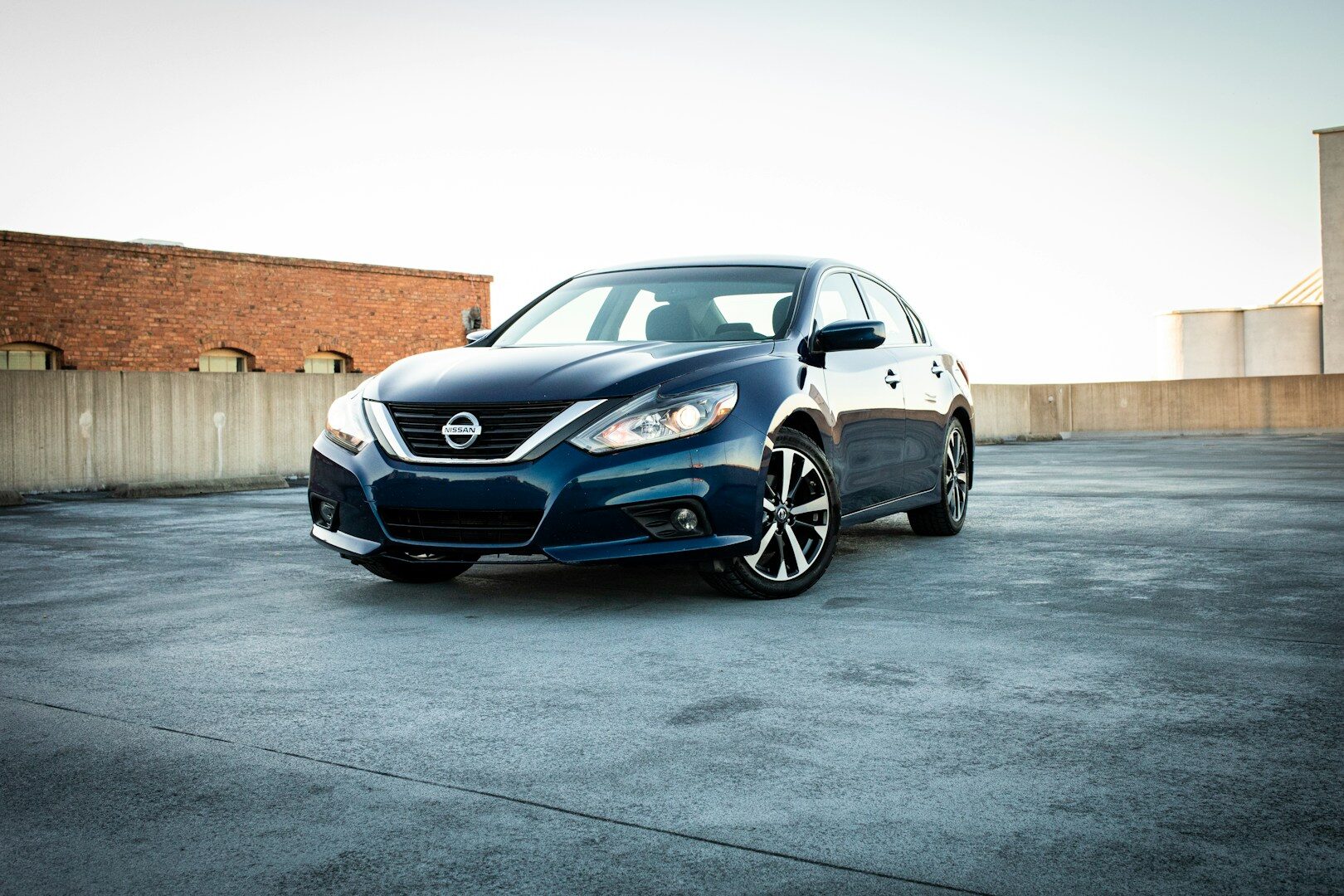
Nissan wants you to believe the Altima is dying because America fell out of love with sedans. That explanation is convenient. It also leaves out the parts that actually explain what happened.
When Ponz Pandikuthira, Nissan Americas’ chief product and planning officer, told WardsAuto the Altima would “soon depart” so a more mature Sentra could handle the brand’s remaining sedan business, most coverage filed it under a familiar headline: another sedan dies, crossovers win. Ford killed the Fusion. Chevrolet killed the Malibu. Volkswagen killed the Passat. Add Nissan’s 35-year-old volume sedan to the pile and move on.
Except the Altima doesn’t fit that pattern as neatly as it looks. Read the details Nissan volunteered to WardsAuto, almost as an aside, and a different story shows up: a company that isn’t retreating from sedans by choice so much as one that can no longer afford to build the sedan it actually wanted to build.
What Nissan Actually Said
Pandikuthira’s comments were specific. Versa and Maxima are already gone. Altima will soon depart. The redesigned Sentra, he said, is meant to absorb what’s left of Nissan’s sedan demand on its own. A Nissan spokesperson later softened the timeline, confirming a 2027 Altima and insisting the car still matters to the lineup today. No final model year has been announced. No production end date, either.
That’s not indecision. That’s a company managing a wind-down in public, one trial balloon at a time.
The Tariff Excuse Doesn’t Survive Contact With the Facts
Ask why Nissan is shrinking its sedan lineup, and tariffs come up fast, just not in the way most coverage implied. The Sentra and Kicks are imported from Nissan’s plant in Mexico, and as lower-priced, tighter-margin vehicles, tariffs squeeze them harder than anything else in the lineup. Nissan’s fix, according to Pandikuthira, is a build-where-you-sell strategy anchored by its enormous plants in Tennessee and Mississippi.
Here’s the detail that undercuts the whole framing: the Altima has been doing exactly that since June 1992. It’s assembled at Nissan’s Smyrna, Tennessee plant, the same plant now being expanded to add Rogue and Infiniti QX60 production. The Altima isn’t exposed to the tariff problem Nissan says it’s solving. It may be the single most tariff-proof vehicle in Nissan’s entire passenger-car lineup, and it’s still getting walked toward the door.
If tariffs actually threatened the Altima, killing it would make no sense. It doesn’t. Which means tariffs aren’t why it’s dying. They’re just the explanation that’s easiest to say out loud.
The Real Successor Was Supposed To Be Electric. It Got Cancelled Instead.
The detail that actually explains this decision is buried later in the same interview, and it hasn’t gotten the attention it deserves. Pandikuthira acknowledged that Nissan had planned two electric sedans to occupy the space held by Altima and Maxima. EV volume never took off the way the company expected, so those cars never left the planning stage, and he suggested the segment might not recover until 2029 or 2030.
Read that again. Nissan didn’t conclude that midsize sedans were unnecessary. It planned electric replacements for both the Altima and the Maxima, watched demand stall, and shelved them. The Sentra isn’t inheriting Altima’s job because it’s better suited to it. It’s inheriting the job because the cars actually designed for it never got built, and Nissan doesn’t have the capital lying around to develop a new gas-powered midsize platform for a segment it already expects to keep shrinking.
The Altima isn’t losing to the Rogue. It’s losing to an EV sedan that never made it off the whiteboard.
A Failed Merger Left No Room To Experiment
None of this happens in a vacuum. Nissan spent 2024 and 2025 trying to merge with Honda, a deal built around sharing platforms and splitting powertrain development costs so neither company had to keep funding shrinking segments alone. That merger collapsed, and Nissan’s turnaround plan without Honda’s balance sheet to lean on already includes shutting seven factories and closing two design studios worldwide.
A company in that position doesn’t fund a new midsize sedan platform on a hunch that the segment will recover. It funds the programs with the clearest path to volume: the Rogue, which already outsells the Altima by a wide margin and is getting a new 40-mpg hybrid powertrain this November; the Kicks, positioned as the brand’s cheapest crossover entry point; and a returning body-on-frame Xterra, which will share its underpinnings with the Frontier pickup and spin off up to five separate derivatives across Nissan and Infiniti. Every one of those programs pulls engineering hours and capital that might once have gone toward keeping the Altima current.
What Buyers Actually Lose
Strip away the corporate framing, and the practical loss is straightforward. The 2026 Altima starts at $27,580, runs a 2.5-liter four-cylinder to an EPA-rated 36 mpg highway, and remains one of a shrinking handful of midsize sedans still offered with all-wheel drive, a configuration that typically costs thousands more once you move up to a crossover. Sedans also tend to be simpler and cheaper to insure and repair than crossovers of similar size, thanks to lower ride heights, fewer complex trim pieces, and decades of established parts and labor pricing that body shops already know cold. A compact Sentra doesn’t replace that math. Neither does a Rogue that starts thousands of dollars higher.
When the Altima finally goes, whatever year that ends up being, the loss won’t be sentimental. It will be a hole in the market for buyers who want real interior space, real fuel economy, and real all-wheel drive without paying crossover money for any of it.
Nissan isn’t wrong that Americans want crossovers. That’s just not the whole reason the Altima is disappearing, and it’s a far more flattering explanation than the alternative: a company that bet on a merger to help fund its next generation of sedans, lost that bet, watched the electric cars meant to replace its current ones stall in planning, and is now quietly retiring a nameplate it can no longer justify engineering alone.
The Altima was never the exciting car in this class. It didn’t need to be. Its entire value was showing up, working, and costing less than everything around it for more than three decades. Watch how Nissan manages its next round of cuts, and you’ll learn more about the company’s finances than about any car it builds.