
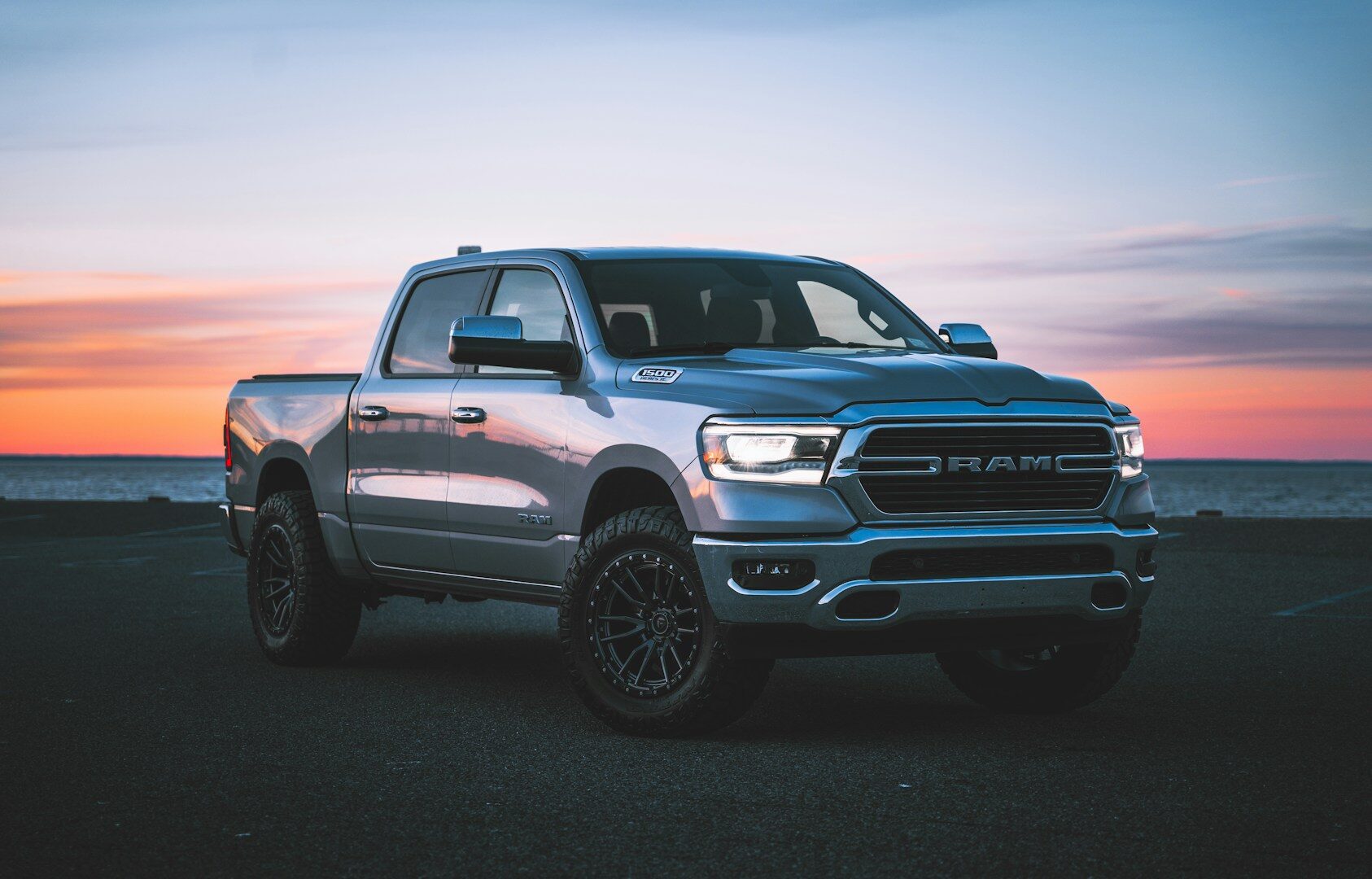
Ram just recalled 1.27 million trucks. Buried in the same federal paperwork is a number that matters more than the headline: Stellantis estimates only 6.1 percent of those trucks actually have the defect it’s recalling them for.
That gap is the real story here, not the bolt. The distance between “we recalled 1.27 million vehicles” and “roughly 77,500 of them are actually broken” is what a modern recall looks like once you read the fine print, and it says more about how little a giant automaker can pinpoint inside its own supply chain than any press release ever will.
According to the Part 573 recall report Stellantis filed with the National Highway Traffic Safety Administration on July 30, Chrysler (FCA US, LLC) is recalling certain 2019 through 2026 Ram 1500 pickups built between February 17, 2018, and April 27, 2026. That’s essentially the entire production run of the current-generation truck, not one bad week on one assembly line. The defect lives in the second row: the seatbelt buckle anchor bolts may not have been properly secured, which can reduce clamping load and how well the belt restrains an occupant in a crash. NHTSA’s filing cites Federal Motor Vehicle Safety Standard 210, the anchorage rule that governs how seatbelts bolt to the vehicle structure.
Stellantis’s own chronology says field data pointed at the anchors for a while before engineers traced a root cause in mid-July and turned it into a recall decision within about two weeks. That part moved fast. How long it took to notice the pattern in the first place is the question the filing doesn’t really answer.
Here’s what almost nobody outside the industry understands about that 6.1 percent figure: it isn’t a rounding error, and it isn’t Stellantis hedging. It’s closer to an admission. When a manufacturer can’t identify which specific bolts, on which specific trucks, off which specific line, were actually torqued wrong, it doesn’t get to recall a fraction of the fleet. It has to recall everyone who could plausibly be affected, because there’s no economical way to inspect 1.27 million trucks’ worth of hardware sitting in driveways across three countries. So the population balloons to cover eight years of production, and the estimate of trucks that actually have the defect shrinks to single digits. The recall notice isn’t really telling owners that 1.27 million trucks are broken. It’s telling them Stellantis can’t yet say which ones are, and that not knowing is more expensive to fix than just checking everybody’s truck.
That’s also why the fix is an inspection first, not an automatic parts swap. Owners will get a letter, take the truck to a dealer, and have a technician check torque on the second-row anchor bolts. Most trucks will pass. A little more than one in twenty, by Stellantis’s own math, won’t.
Rivian hit a version of this same wall a few weeks earlier, when a new NHTSA investigation into rear suspension failures showed the automaker’s own prior recall had covered barely a sixth of the real problem. Different company, different part, same underlying math: manufacturers routinely know less about the true scope of a defect than their first recall filing implies.
The second row matters here in a way that’s easy to skim past. That’s where child seats and boosters usually go in a family truck. A seatbelt anchor with reduced clamping load isn’t a comfort complaint or a rattle to live with; it’s a restraint system that may not do its job at the exact moment it’s needed. NHTSA’s description ties the defect directly to injury risk in a crash, not to some theoretical inconvenience down the road.
Zoom out and the timing gets more interesting. This is Stellantis’s second recall exceeding a million vehicles in about two months. In June, the company told owners of roughly 1.3 million Jeep Wranglers and Gladiators to park outside because power steering wiring could catch fire, campaign 26V363000, a “do not park in the garage” order, which is about as serious as a recall advisory gets. Add the roughly 456,000 Ram and Jeep vehicles the company recalled over the past year for a trailer brake and light failure, and Stellantis has touched close to three million vehicles in North America with active safety campaigns inside a twelve-month window, a period during which recall activity industry-wide has also been climbing.
The person signing off on all of it is Antonio Filosa, who became Stellantis’s chief executive in June 2025. His previous job, according to the company’s own announcement, was Chief Quality Officer and Chief Operating Officer for the Americas. Stellantis put its quality chief in charge of the whole company specifically because quality was the problem investors, dealers, and owners kept pointing to. A year into his tenure, the recalls are still coming, they’re still measured in seven figures, and this one traces back through years of field data the company was already gathering while Filosa held the job created to catch exactly this kind of thing.
None of that means Filosa personally missed a torque spec. Quality problems at a company that builds several million vehicles a year rarely trace back to one person, one plant, or one decision. But the optics are hard to spin: the executive promoted to fix Stellantis’s recall reputation is now the executive whose name sits atop the recalls.
It’s worth remembering what a recall actually is in the regulatory sense, because the word gets used like an emergency siren. NHTSA’s process starts with owner complaints, moves through screening and analysis, and only becomes a recall once a manufacturer or the agency determines a genuine safety defect exists. From there, the manufacturer, not NHTSA, is required to notify owners by mail within 60 days and fix the problem at no cost. Ram owners in the affected range don’t need to panic. They need to watch the mailbox, or check their VIN against NHTSA’s database now instead of waiting on a letter that can take weeks to arrive.
The Auto Wire keeps a running list of the country’s major open recall campaigns if you’d rather check now than wait.
Stellantis isn’t recalling 1.27 million trucks because it knows which ones are broken. It’s recalling them because it doesn’t, and in an industry where every automaker is one field-data review away from admitting the same thing, that’s the number worth remembering long after this particular bolt gets torqued back down.