
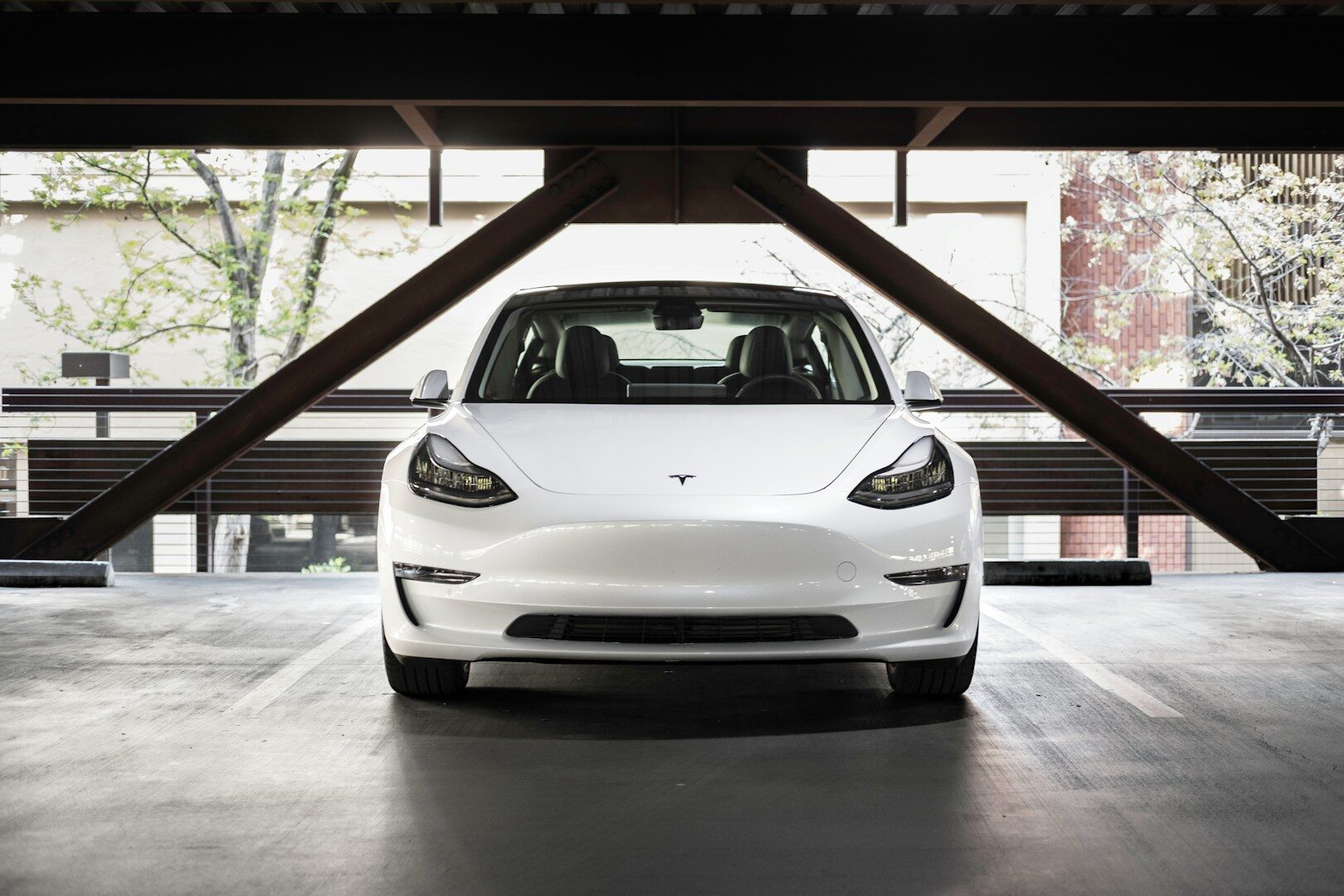
Tesla has spent years telling owners that Full Self-Driving is something you switch on. With FSD (Supervised) v14.3.9, it’s also something that can switch itself on.
On September 4, the company’s AI team announced on X that v14.3.9 was about to roll out with a new active safety feature set, under which FSD Supervised can activate on the driver’s behalf when an imminent collision is detected and Automatic Emergency Braking may not be enough. The same post adds that it may also engage if the system detects the driver is heavily distracted or has accidentally disengaged FSD. X
The feature has a name now, too. Tesla’s current Model Y manual lists Automatic Collision Evasion in its Active Safety Features chapter, next to Lane Assist, Collision Avoidance Assist, and Speed Assist. That filing location matters. Tesla is putting this in the same drawer as lane-departure and emergency-braking systems, not with the convenience features.
Buyer’s guide: Best Dash Cams for Every Budget (2026 Buyer’s Guide)
Read the fine print before the headline
The provocative version of this story is that Tesla will steer your car even if you never turned on FSD. That’s true only in a narrow sense, and the gap is important.
This is an FSD (Supervised) release, and the mechanism works by switching FSD on. Tesla’s in-car release notes describe Automatic Collision Evasion as something that “activates Full Self-Driving (Supervised) to try to keep your vehicle safe and then continue driving.” A car with no FSD software running has nothing to switch on. The audience here is owners who have FSD available but were driving themselves when things went wrong. It is not every Tesla on the road.
Related Articles
- The U.S. Is Pumping Record Oil. That Won’t Stop the Shortage Forming at the Pump.
- The Cybertruck’s Federal Recall File Is a Masterclass in Why Factories Beat Prototypes
The release notes list two triggers during manual driving:
- Braking won’t be enough. A frontal collision is imminent, and braking alone may not prevent it.
- The driver isn’t really driving. The car decides you aren’t paying enough attention, with reaching toward the back seat given as an example. Or it concludes FSD may have been disengaged by accident.
The second trigger is the more interesting one. Anyone who has used a modern driver-assist system knows the problem: you reach for a dropped phone, your knee nudges the wheel, and the system hands control back to a driver who is looking at the floor mat. Tesla’s fix is to let the software take control again when it thinks that handoff was a mistake.
Why steering is a bigger deal than braking
Automatic emergency braking is familiar by now, and it will soon be required. NHTSA’s FMVSS No. 127 rule requires new cars to stop and avoid contact with a vehicle ahead at up to 62 mph, and to brake automatically at up to 90 mph when a lead-vehicle collision is imminent. The compliance deadline for most automakers is September 1, 2029. nhtsaFederal Register
That standard is about braking in a straight line. The physics explain why steering is tempting. Stopping distance grows with the square of speed, so at highway pace there are moments when no amount of braking will prevent a collision. In those same moments, moving a few feet sideways would. Human drivers know this instinctively, which is why “brake and swerve” is common advice. It is also why panic swerves put so many cars in ditches.
A braking false positive is unpleasant: you get a hard stop and maybe a rear-end tap from the car behind you. A steering false positive moves the car sideways toward something else, whether that’s a guardrail, a shoulder, or another lane of traffic. That is a much larger downside, and it explains why most automakers have limited evasive-steering aids to adding torque when the driver has already started to swerve. Tesla is going further and letting its driving software choose the path.
Tesla also says the feature carries on driving after the maneuver instead of dropping control back on a startled human mid-swerve. That’s a sensible design choice. It also means that, for a stretch of road you didn’t choose, a Level 2 system is in charge of a car you were driving a moment earlier.
The hardware keeping it all honest
This feature depends heavily on the camera suite and on calibration, which should concern anyone who takes a Tesla to a body shop or glass shop.
Tesla’s owner’s manual says cameras must complete a self-calibration before features like Automatic Emergency Braking can be used for the first time or after some types of service repairs, and calibration typically completes after 20 to 25 miles of driving. It also instructs owners to clear the calibration if a camera has shifted from its calibrated position, such as after a camera or windshield replacement.
The practical lesson: after a windshield swap, fender repair, or bumper job, don’t assume every safety system is working when you leave the shop. Check the calibration status on the touchscreen. A system allowed to steer your car needs to know precisely where its cameras are pointed.
The driver-attention trigger relies on the cabin camera. The manual notes that an icon appears when the cabin camera is actively monitoring driver attentiveness, and that camera now has a role during manual driving as well. Sunglasses, a hat brim, or a dirty lens all affect how well it can judge whether you’re paying attention.
Insurance and legal questions nobody has answered yet
Here’s the issue insurers and lawyers will focus on: when software takes control seconds before a crash, who was driving?
NHTSA already tracks this through its Standing General Order, which requires identified manufacturers to report certain crashes involving vehicles equipped with Level 2 driver-assistance systems. Under the order as NHTSA originally summarized it, a crash was reportable if the Level 2 system was in use at any time within 30 seconds of it and the crash met severity criteria such as an airbag deployment or tow-away. A feature that switches on FSD right before an impact is likely to create exactly those reports, including crashes the driver started and the software tried to rescue. Expect the data to get more complicated, and expect lawyers to dig into it. NHTSA
Related Articles
- Hyundai’s 2028 Self-Driving Plan Hinges on a Level That Doesn’t Officially Exist
- The Fed Hasn’t Cut Rates Once This Year. Car Loans Got Cheaper Anyway.
For owners, the takeaways are simple. Your insurer will still treat you as the driver. FSD remains, in Tesla’s own words, supervised, and nothing in this release changes that responsibility. If the car swerves and hits something, you’ll be the one explaining it to your adjuster. Keep your dashcam footage. Tesla’s recent software lets owners save clips that include speed, steering angle, and self-driving state, and in a claim where the question is “who steered?”, that data could decide the outcome.
The bigger picture
Put simply, Tesla is using its most capable driving software as a backup system for human drivers. The logic holds up: if the software drives well, it should help when a person is about to crash. The business angle is just as clear. Every rescue is an advertisement for a product owners pay for.
The open questions are the ones Tesla hasn’t fully answered publicly. How often does it fire when it shouldn’t? How does it decide that steering is safer than braking alone? Can owners turn it off? The manual does say that if the Owner’s Manual conflicts with the Release Notes, the Release Notes take precedence, so read the notes on your own screen before assuming anything.
Until independent crash data exists, treat Automatic Collision Evasion like an airbag: good to have, and not something to count on.