

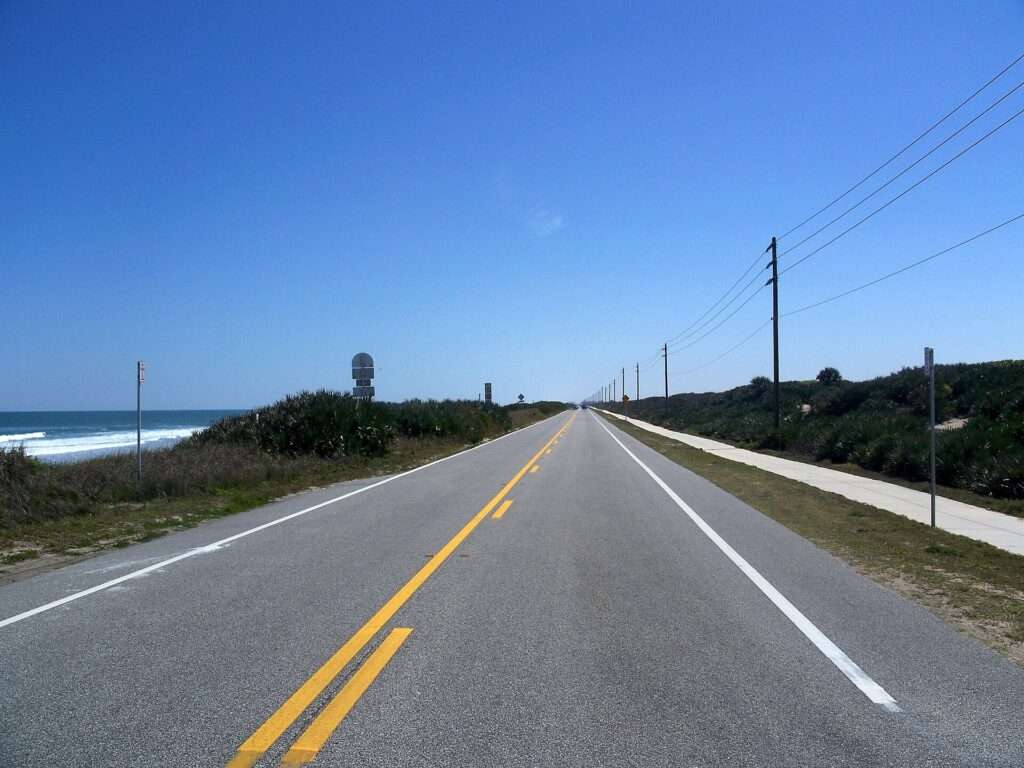
Scott P. March bought a 2026 Chevrolet Corvette on Nov. 1, 2025, and around 6 p.m. that same day he was on State Road A1A in Ormond-by-the-Sea, Florida, at 147 mph, according to the Office of State Attorney R.J. Larizza. Seconds later, trying to pass in a marked no-passing zone at about 110 mph on a two-lane road posted at 45, he hit the back of a Jeep Wrangler. Inside were Thomas Lauck, 72, and his wife, Julia Ann Lauck, 73. The Jeep overturned and both were thrown out. Thomas died at the scene. Julia lost a leg and died at the hospital days later.
On Oct. 7, Circuit Judge Christian Miller sentenced March, now 64, to 47 years in state prison. In August he had entered no contest pleas to two counts of DUI manslaughter and two counts of vehicular homicide, with no deal from prosecutors. The toxicology report put his blood alcohol at about 0.13%, the state attorney’s office said, against Florida’s 0.08% limit.
I went through the statutes behind that number, and most of it is Florida’s scoresheet arithmetic. The code set a floor of 23.7 years, the judge refused to go below it, and he imposed it twice, once for each person who died. A 2020 Florida Supreme Court ruling is the reason that floor was as high as it was.
A Rejected 23-Year Offer and a Request for 15
The Daytona Beach News-Journal reported from the hearing that Assistant State Attorney Ashley Terwilleger told the court the state first planned to make no offer at all. After talking with the Laucks’ family, prosecutors offered 23 years. March turned it down.
His attorney, John Terhune, explained why in a written motion. The offer was 23.7 years, the minimum Florida’s guidelines called for, and Terhune argued that for a man March’s age that was a life sentence. He asked for 15 years instead, a term he wrote “acknowledges the gravity of two deaths while preserving a realistic possibility that Mr. March will live to complete it and be released,” according to the News-Journal. March apologized in court and asked for leniency, citing health problems and personal struggles, among them open-heart surgery and a 2025 divorce filing, WKMG News 6 reported.
The state’s case for more leaned on what happened after the crash. March had bought the Corvette earlier that day for more than $170,000, the News-Journal reported, and Terwilleger said a witness testified that March, at the scene, said he would have to buy another car the next day. The Auto Wire heard a version of that line this summer from a Corvette driver accused of fleeing Arkansas troopers at 156 mph; nobody died in that case. The Laucks’ niece, Missy Cole, and their son, Zach Osborne, read statements asking for the maximum. Cole told the court the couple were “ripped from our lives, tragically, senselessly, violently, and with no remorse,” FOX 35 Orlando reported.
Miller did not split the difference. “It is not appropriate for this court with these facts to depart below the minimum sentence,” he said, according to FOX 35, pointing to “the callousness of your behavior afterwards.” WKMG reported the structure: 23.7 years on counts one and two, and 23.7 years on counts three and four, run consecutively. That totals 47.4 years.
How a 15-Year Felony Carries a 23.7-Year Minimum
Both crimes March pleaded to are second-degree felonies. DUI manslaughter carries a four-year mandatory minimum per count, and vehicular homicide covers a death caused by driving in a reckless manner. Under section 775.082, the ordinary cap on a second-degree felony is 15 years.
Florida’s Criminal Punishment Code works from the other direction. Every offense on the severity chart carries points. DUI manslaughter is Level 8, worth 74 points as the primary offense and 37 as an additional one. Vehicular homicide is Level 7, worth 28 points as an additional offense. Under section 921.0024, each death adds 120 victim-injury points. The minimum prison term in months is the total, minus 28, cut by 25%.
I did not find March’s scoresheet in any public filing, so this is The Auto Wire’s reconstruction from the statute’s tables. One DUI manslaughter count as the primary offense (74), the second as an additional (37), two vehicular homicide counts (56), and two deaths (240) come to 407 points. Subtract 28 and take 75% of the remainder, and the result is 284.25 months, or 23.69 years. That matches the 23.7-year minimum the defense cited, which suggests that is close to how the sheet added up.
The same statute settles the conflict with the 15-year cap: “If the lowest permissible sentence under the code exceeds the statutory maximum sentence as provided in s. 775.082, the sentence required by the code must be imposed.” The scoresheet minimum becomes the sentence, per count. The statute also says the court “may impose such sentences concurrently or consecutively,” and that at 363 points or more the court may impose life. By that count, March was 44 points past the life threshold. Miller stopped at stacking the minimum twice.
Florida Barred Four Counts for Two Deaths Until 2020
Six years ago, March could not have kept convictions for both charges on the same death. In Houser v. State in 1985, the Florida Supreme Court barred convictions for both DWI manslaughter and vehicular manslaughter for one death, and in State v. Chapman in 1993 it reaffirmed that single homicide rule after the Legislature rewrote the double jeopardy statute. When both convictions were entered, appellate courts threw out the vehicular homicide count. The Fifth District Court of Appeal, which hears appeals from Volusia County, did it in Granger v. State in 2018.
On Dec. 10, 2020, in State v. Maisonet-Maldonado, the court receded from Chapman and held that “the single homicide rule is no longer applicable under Florida law.” The court read section 775.021 to mean “there is no exception for offenses arising from a single death.” That case paired fleeing police with vehicular homicide, but the test it applies looks only at statutory elements, and DUI manslaughter (impairment) and vehicular homicide (recklessness) each require something the other does not.
Those two extra counts cost March real time. Take the 56 vehicular homicide points off the reconstruction and the floor drops to 242.25 months, about 20.2 years per count, or roughly 40.4 years stacked the way Miller stacked them. On that reconstruction, the 2020 ruling added about seven years to the minimum March faced for the same night.
The Speed Alone Was a 30-Day Misdemeanor
Florida added a crime for this kind of driving in 2025. Section 316.1922, dangerous excessive speeding, covers anyone 50 mph or more over the limit, or at 100 mph or more in a way that threatens other people. A first conviction carries up to 30 days in jail or a $500 fine. At 147 mph in a 45, March was 102 mph over. The Auto Wire walked through that statute after a St. Johns County Corvette was clocked at 130 in a 45.
The distance between 30 days and 47 years is two deaths and a 0.13 blood alcohol reading. Vehicular homicide needs only reckless driving that kills someone; it is the charge two BMW drivers face after a street race in Ocala that killed a 77-year-old woman. The alcohol added the Level 8 DUI manslaughter counts, their four-year mandatory minimums, and most of the points on March’s scoresheet.
At 85%, the Earliest Release Lands Past 100
Florida does not let prisoners shorten a sentence below 85% with gain time, under section 944.275. Eighty-five percent of 47.4 years is about 40.3 years. March has been in custody since shortly after the crash; the state attorney’s office lists his birth date as March 26, 1962. On those numbers, his earliest release would come around age 103.
That math cuts against part of Terhune’s argument. A single 23.7-year term served at 85% is about 20.1 years, which would have put March out at roughly 83. The consecutive second term is what pushes the date past 100.
March has 30 days from the Oct. 7 sentencing to file a notice of appeal, WKMG reported. Florida’s appellate rules limit what a defendant who pleads without reserving an issue can raise, largely to whether the plea was voluntary and whether the sentence was legal. A sentence at the scoresheet minimum is hard to call illegal. The case number is 2025 107624 CFDB in Volusia County circuit court.
“Two people are dead because the defendant chose to drive in a reckless and intoxicated state,” Larizza said in the office’s release. “Forty-seven years in prison cannot bring them back, but it does send a clear message to drunk drivers that you will pay dearly for your criminal transgressions.”
The Laucks’ family asked for the rest of March’s life, and the judge’s choice to run the terms back to back delivered it. When a drunk driver kills two people, should Florida judges stack a sentence for each victim even when one term would already keep a 64-year-old in prison into his 80s, or should one death’s worth of time be enough when the offender is that old?