
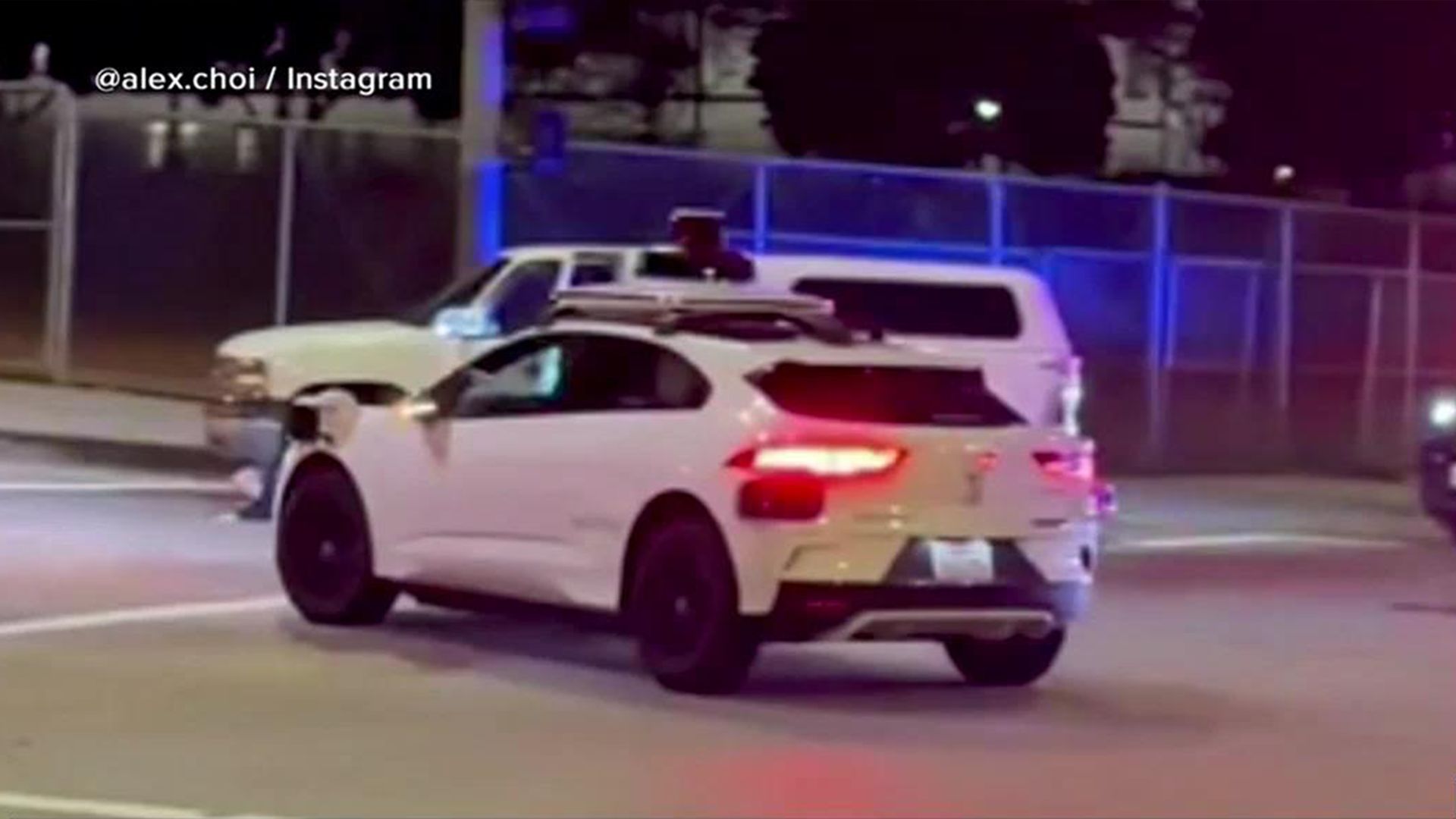
Picture a fire captain waving his arms at a driverless Waymo that just rolled past his cones and stopped six feet from the hydrant his crew needs. If a human driver pulled that stunt, the captain has real options: get it towed, have an officer write a citation, even have the driver arrested for obstruction. With the Waymo, he has exactly one option that actually does something: write down what happened and send it up the chain. Nobody standing at that scene can ticket the car. Nobody can impound it. Nobody on the ground has the authority to make the company that owns it change anything by tomorrow morning.
Garage-worthy EDC gear, on sale this week.
That gap, not the fire truck, is the real story hiding inside the letter NHTSA sent driverless car developers on July 8.
What NHTSA Actually Sent
NHTSA Administrator Jonathan Morrison issued a public call to action after the agency said it has documented a repeated pattern: driverless vehicles driving into active emergency scenes, blocking ambulances and fire apparatus, and failing to react to flashing lights, flares, smoke, and traffic cones. The letter isn’t a recall. It isn’t a rule. It’s a warning, paired with a promise to meet with AV developers by the end of the month, and a blunt line from Morrison that “public trust on our roads is earned, not given.”
That’s worth sitting with for a second. The agency felt it necessary to say, out loud, that being allowed to operate on public roads is not a permanent entitlement. The letter’s other big admission, that no federal standard exists for testing whether an automated system can even recognize an emergency scene, is its own story. This one is about what happens to that letter once it reaches street level.
The Only Paperwork That Exists
Here’s what the letter doesn’t say, and what almost nobody outside the industry seems to know: in California, home to nearly every major robotaxi fleet, a police officer who encounters a misbehaving driverless car doesn’t reach for a ticket book. The California DMV, which holds exclusive authority over AV testing and deployment permits statewide, gives law enforcement something else entirely. It’s called an OL 325, officially the Notice of Autonomous Vehicle Noncompliance. Agencies can’t just grab these from a supply closet. Departments have to request them in bulk, on official letterhead, mailed or faxed to the DMV’s Materials Management Section in Sacramento.
A form. Not a fine.
Why Your City Has No Say
That’s by design, not by accident. When states began writing AV testing and deployment laws in the mid-2010s, nearly all of them centralized authority at the state level specifically to keep cities from building a patchwork of conflicting local ordinances. A company scaling a robotaxi fleet across a state needed one regulator to satisfy, not forty. It was a reasonable trade for an industry trying to grow. It also means the city council, the police chief, and the fire captain standing at the scene were written out of the enforcement chain before the first driverless car ever picked up a fare.
Atlanta found this out the hard way. Local police there simply won’t cite robotaxis for infractions at all, because state law never spelled out who, exactly, is responsible when there’s no driver behind the wheel to hold accountable.
This Has Already Happened, Repeatedly
NHTSA’s letter treats the first-responder problem like a fresh discovery. It isn’t. A Waymo slipped past a felony arrest scene in downtown Los Angeles. Another one, months later, sat inside an active fire scene in Hollywood for roughly ten minutes before anyone got it to leave. Neither incident produced a citation, a fine, or a suspended permit, because none of the people who watched it happen had the authority to issue one.
The pattern isn’t limited to fully driverless cars, either. Even with a human behind the wheel and legal responsibility fully intact, a Tesla operating on Autopilot crashed into a parked squad car in Illinois earlier this year, one entry in a list of similar collisions with parked emergency vehicles that stretches back the better part of a decade. Removing the steering wheel didn’t create this failure mode. It just removed the person who used to be legally answerable for it.
Who This Arrangement Actually Protects
Centralizing AV oversight at the state and federal level is good business for the companies building these fleets. One set of rules is cheaper to comply with than fifty, and it’s a lot easier to negotiate with a handful of state regulators than with every city council whose streets you want to drive on. NHTSA’s letter keeps that structure fully intact even while publicly scolding the industry over it.
The people left holding the bag are the ones who show up to the actual emergency: the firefighters whose engines get boxed in, the officers whose arrest scenes get driven through, and the cities whose 911 response times quietly get longer every time it happens. None of them can do a thing about it in the moment. All they can do is document it and hope Sacramento, or now Washington, eventually agrees it’s a pattern worth acting on.
What Readers Should Remember
A teenager who blocks a fire truck on her way to school can lose her license by dinnertime. A robotaxi that does the same thing can keep picking up fares by dinnertime too, because everyone with the authority to stop it is sitting in an office several jurisdictions away from the fire.
NHTSA’s letter will generate headlines this week. The bigger story is sitting quietly in a DMV filing cabinet: the only enforcement tool that currently exists for this problem is a form, and forms don’t move traffic.