
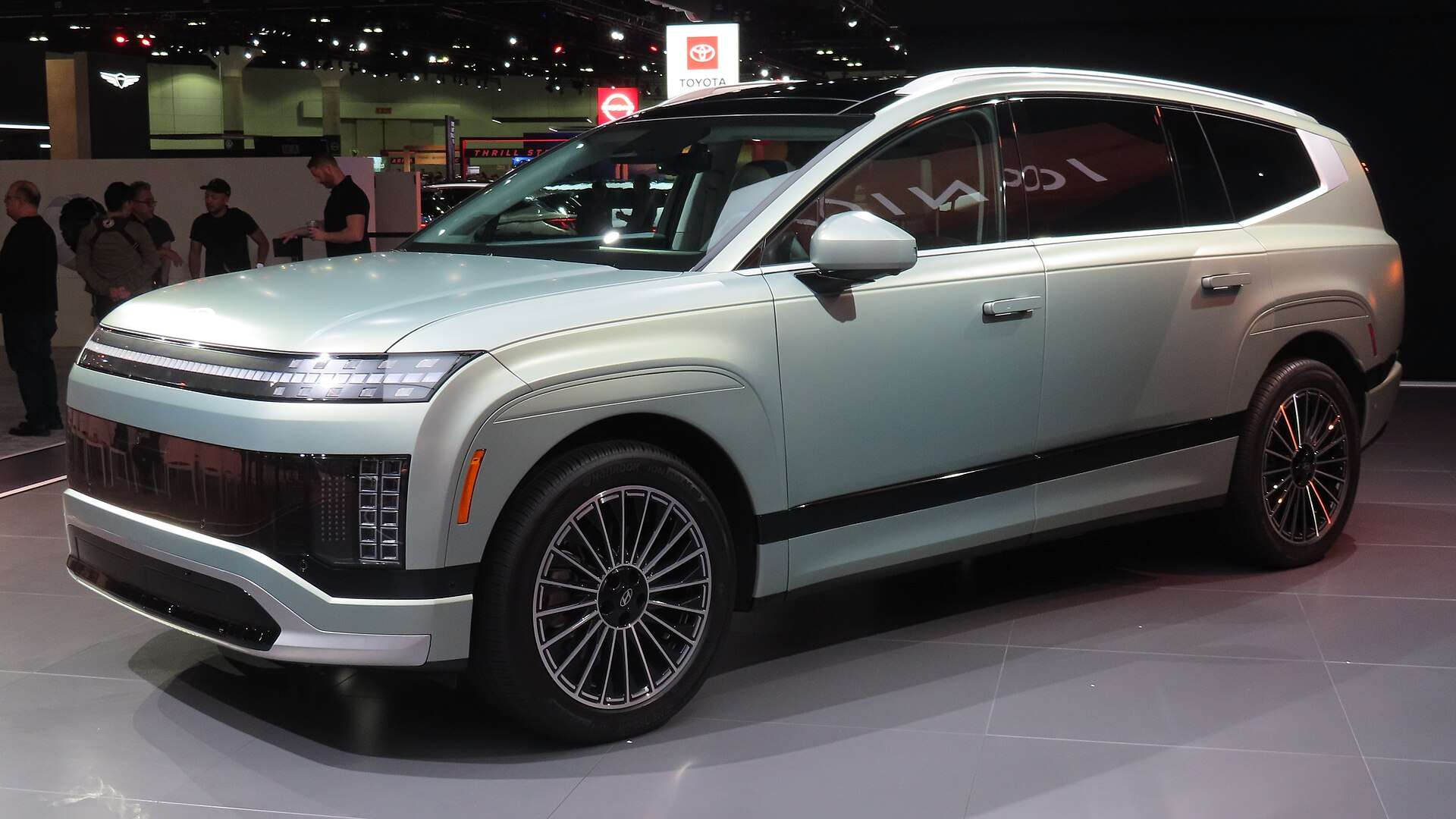
Hyundai is recalling 5,360 examples of the 2026 Ioniq 9. The problem sits in the second row, where the power seats may not stop when they hit a person or an object. The Hyundai Ioniq 9 recall, NHTSA campaign 26V588 (Hyundai recall 307), covers Limited, Calligraphy and Calligraphy Design trims built from March 2025 to May 2026. Hyundai will fix it for free with a seat-controller software update, over the air or at a dealer. Owner letters go out November 9, 2026.
If that defect sounds familiar, it should. The same failure mode forced Hyundai to recall 61,093 2026 Palisades in March, after a fatality.
What the Hyundai Ioniq 9 recall covers
The affected trims have powered second-row seats that fold, stow and slide at the push of a button. According to the recall, those seats may not sense contact with an occupant or object while they move. Instead of stopping or reversing, they can keep going. That includes folding and stowing while someone is still sitting in them. Hyundai has logged five complaints, and two involve minor injuries.
Until the update arrives, Hyundai advises keeping children out of the affected second-row seats. Nobody should run the power-fold or one-touch functions while anyone, or anything, is in the seat’s path. Owners can check their VIN at NHTSA’s recall lookup or call Hyundai customer service at 1-855-371-9460.
The Palisade connection
In March, Hyundai filed NHTSA campaign 26V160 for 61,093 2026 Palisade Limited and Calligraphy models, gas and hybrid. Their second- and third-row power seats could fail to detect an occupant during automatic folding and one-touch walk-in. That report lists one fatality in the third row and four minor second-row injuries. We covered what actually failed inside the Palisade’s power seats and why that recall was a warning sign for software-controlled hardware at the time.
The Ioniq 9 action is a separate campaign with its own VIN list and software. The lesson is the same, though. A seat that moves on its own is only as safe as the code that tells it when to stop. And federal rules set no obstruction-detection standard for powered seats, the way they do for power windows. We made that point when GM recalled the Cadillac Vistiq for a similar seat problem in July. Three three-row family SUVs with seat-movement recalls in 2026 alone is starting to look like a pattern, not a coincidence.
Why it matters to owners and shoppers
Current owners: The update is free. Because Hyundai can push it over the air, many owners may never need a service visit. Don’t assume it has arrived, though. Check your VIN, and confirm the seat-controller update shows as installed, especially if young children ride in the second row.
Shoppers: The recall touches only the top trims, which carry the powered second-row seats and the highest sticker prices. Looking at a new or used Limited or Calligraphy? Ask for proof the recall work is done before you sign. Federal law bars dealers from selling new vehicles with open safety recalls, but that rule doesn’t cover most used-car sales.
The bigger picture: Hyundai builds the Ioniq 9 at its Metaplant in Georgia, and the SUV already has a demand problem. In August, U.S. Ioniq 9 sales fell 42 percent to 589 units, as we noted in our look at Hyundai’s August sales slide. A small recall won’t sink a model. Still, a family EV fighting for traction didn’t need headlines about seats that fold on passengers. The speed of the over-the-air fix will show whether Hyundai’s software pipeline is as ready as its marketing claims.
Would a second power-seat recall in six months make you skip the powered second row, or even the brand, on your next three-row SUV? Share your take in the comments.