
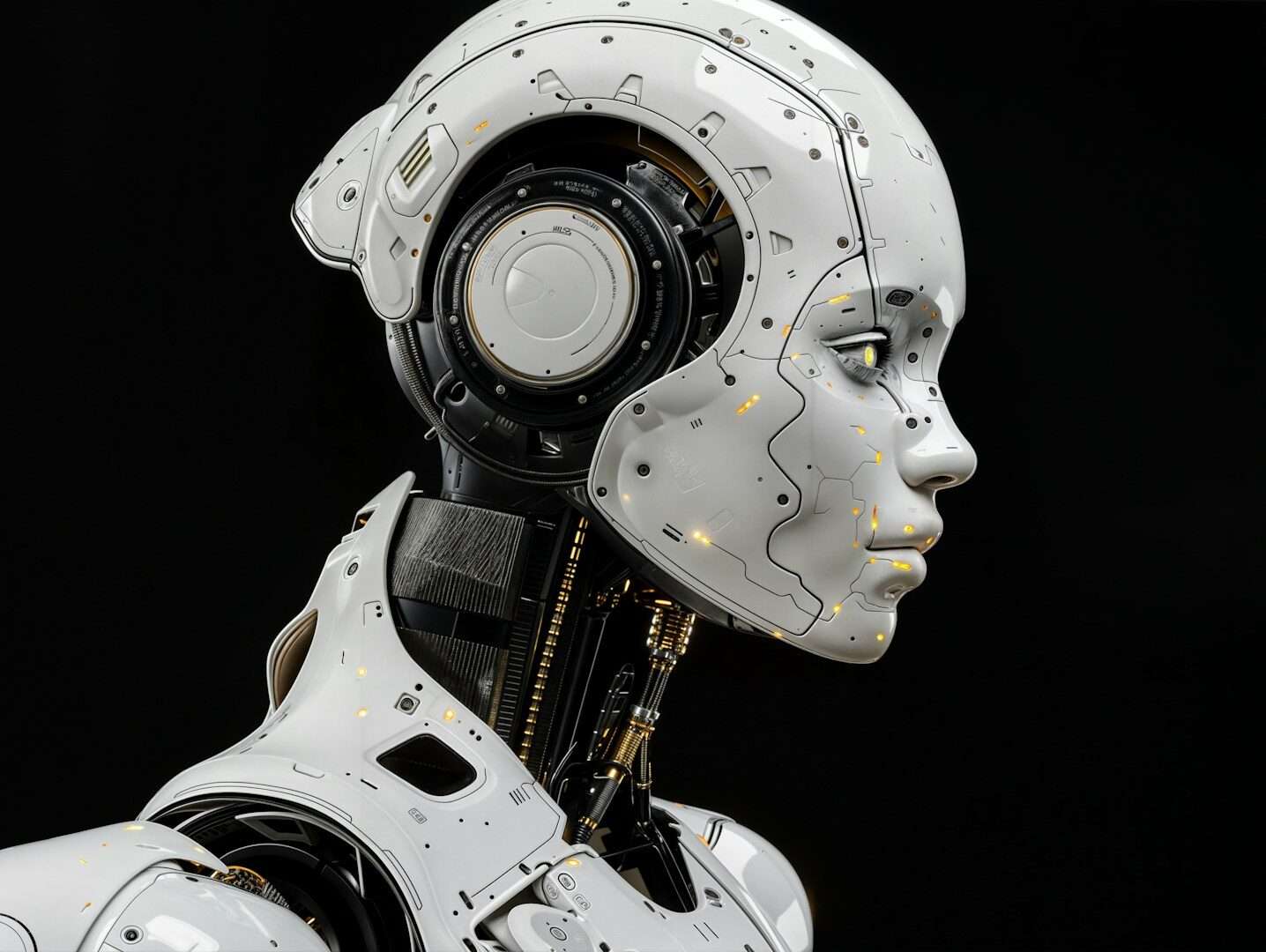
Toyota wants a robot on the assembly line that is soft enough to bump into things. That’s the unusual engineering goal behind ELEY, the in-house robot at the center of Toyota’s latest factory-automation plans. You won’t find a more glamorous story in the company’s own documents, but this one tells you more about where car manufacturing is going.
First, a note on sourcing. The deployment numbers and the 2028 timeline now attached to this story don’t appear in any material Toyota has published. We searched the company’s global newsroom and research pages and found nothing. Until Toyota puts those figures on the record, we’re not repeating them. What Toyota has published about the robot itself is more interesting anyway.
Meet ELEY
The name comes from Toyota’s own research center writeup: Embodied Learning robot for Enhanced Yield. Stripped of the branding, it describes a robot that learns physical tasks by copying people, with the goal of higher productivity.
Related Articles
- Michigan Tested Every Cop Car Sold in America. None of Them Can Catch a Base Corvette.
- GM’s Newest Software Just Launched in a V8 Pickup, Not a Cadillac. Follow the Volume.
Toyota’s World Robot Summit exhibit listing gives the hardware basics:
- Weight: 50 kg
- Footprint: 478 mm long by 450 mm wide
- Height: adjustable from 939 mm to 1,619 mm, so it can pick things up from the floor or reach high shelves
- Arms: two human-like arms that can do things like open a box with one hand while taking items out with the other
- Base: an omnidirectional wheeled platform rather than legs
Its body proportions are deliberately human. Toyota says it shaped ELEY’s joint layout like a person’s and matched details such as joint spacing and arm thickness to the average adult Japanese male. The reason is practical. A robot that learns by imitating people copies them best when its arms are built like theirs.
Then there’s the detail that deserves the headline: ELEY has shoulder blades. Toyota added a scapular joint because people rely on their shoulder blades for two-handed tasks such as pushing objects, reaching further, or opening a jar lid. Toyota’s earlier helper robot didn’t have one, and its range of motion suffered for it.
Why “Soft” Is the Hard Part
Most people picture factory robots as orange welding arms behind safety fences. Those arms are stiff by design. They use fast motors driving through high-ratio gearboxes, which gives them big torque in a compact package. The downside is that you can’t easily push them out of the way, so they have to be programmed to avoid touching anything they aren’t supposed to touch.
Toyota learned that lesson with its Human Support Robot (HSR), a helper robot it first showed in 2012. The research team found HSR’s arm couldn’t absorb large forces when it touched objects. If a grasp was even slightly off target, the unexpected forces could damage the arm or cause a malfunction.
ELEY’s answer is a quasi-direct-drive (QDD) actuator in every joint. QDD pairs a high-torque motor with a gear reduction of 10:1 or less. Toyota’s team built its design around a property called backdrivability: how easily an outside force can turn the joint. If ELEY’s hand hits a fixture or a person’s forearm, the arm gives way instead of pushing back. Toyota also dropped the wires and resin belts from earlier prototypes in favor of direct drive, to improve how accurately the arm reaches a position.
For car enthusiasts, the closest comparison is a manual steering rack against a heavily boosted one. Toyota wants the robot to feel the load and yield to it.
Why It Doesn’t Walk
Rival automakers are experimenting with walking humanoids. Toyota’s own Canadian operation has a Robots-as-a-Service agreement with Agility Robotics, announced through a Business Wire release. Under it, Toyota Motor Manufacturing Canada will deploy Agility’s bipedal Digit robot for manufacturing, supply chain, and logistics work after a successful pilot. That operation, which runs assembly plants in Cambridge and Woodstock, Ontario, is Toyota’s largest manufacturing operation outside Japan.
So Toyota isn’t against legs. It just didn’t give them to its own robot, and the reason makes sense. Factory floors are flat and marked out for traffic. Wheels don’t fall over, they don’t spend energy just keeping balance, and they leave the engineering effort for the hands, which is where the hard problems are.
The Brains Come From California
The learning method traces back to the Toyota Research Institute. In 2023, TRI described a method called Diffusion Policy. A person demonstrates a skill hands-on, gives a short text description of the goal, and the robot can then perform the task on its own after dozens of demonstrations. TRI said the method works directly from camera images and touch sensing, which lets it handle cloth, liquids, and other deformable objects that robots have traditionally struggled with.
That matters on a car assembly line. Wire harnesses flop around, rubber seals stretch, and interior trim bends. Those parts are why final assembly still depends heavily on human hands.
Toyota Admits What Isn’t Working
The most credible part of Toyota’s own writeup is its list of weaknesses. The research lead names three areas where ELEY isn’t yet on par with world-leading technology:
Related Articles
- Glendale’s Preteen Car Thieves Didn’t Beat Kia’s Security. They Beat Washington’s.
- The WRC Is Scouting America — But Rally Has a Spectator Problem
- Reliability during long hours of operation
- Repeatability, meaning the hand returning to the exact same point every time
- The data infrastructure that robot learning depends on
For factory work, the first two are the ones that decide whether the robot is usable. A robot that loses precision by the second shift, or misses a clip location by a few millimeters, is a warranty problem waiting to happen. Toyota’s stated plan is to run ELEY under conditions close to real production and use both its successes and failures as training data.
Old Philosophy, New Hardware
None of this contradicts Toyota’s production history. It extends it. The Toyota Production System rests on two pillars, and one of them is jidoka, usually translated as “automation with a human touch.” The idea is that machines stop the moment something abnormal happens, and people aren’t stuck just watching machines. Toyota traces jidoka to Sakichi Toyoda’s automatic loom work. A robot that learns from skilled workers and gives way when it touches something fits that idea closely.
Toyota already has a working example. Its KumiPro robot uses low-cost cameras to pick loosely placed parts and is running on production lines at Toyota Motor East Japan.
What This Means for Buyers
Nothing changes in your driveway soon. The long-term effect Toyota is after is consistency. A skill learned once and shared across plants could narrow the small differences in fit and finish between factories and shifts.
Two things are worth watching. First, whether robots like ELEY move from material handling into the hands-on work of final assembly, where repeatability problems would show up as rattles and warranty claims. Second, whether Toyota publishes a real deployment schedule. The robot is well documented. The rollout plan isn’t yet.