
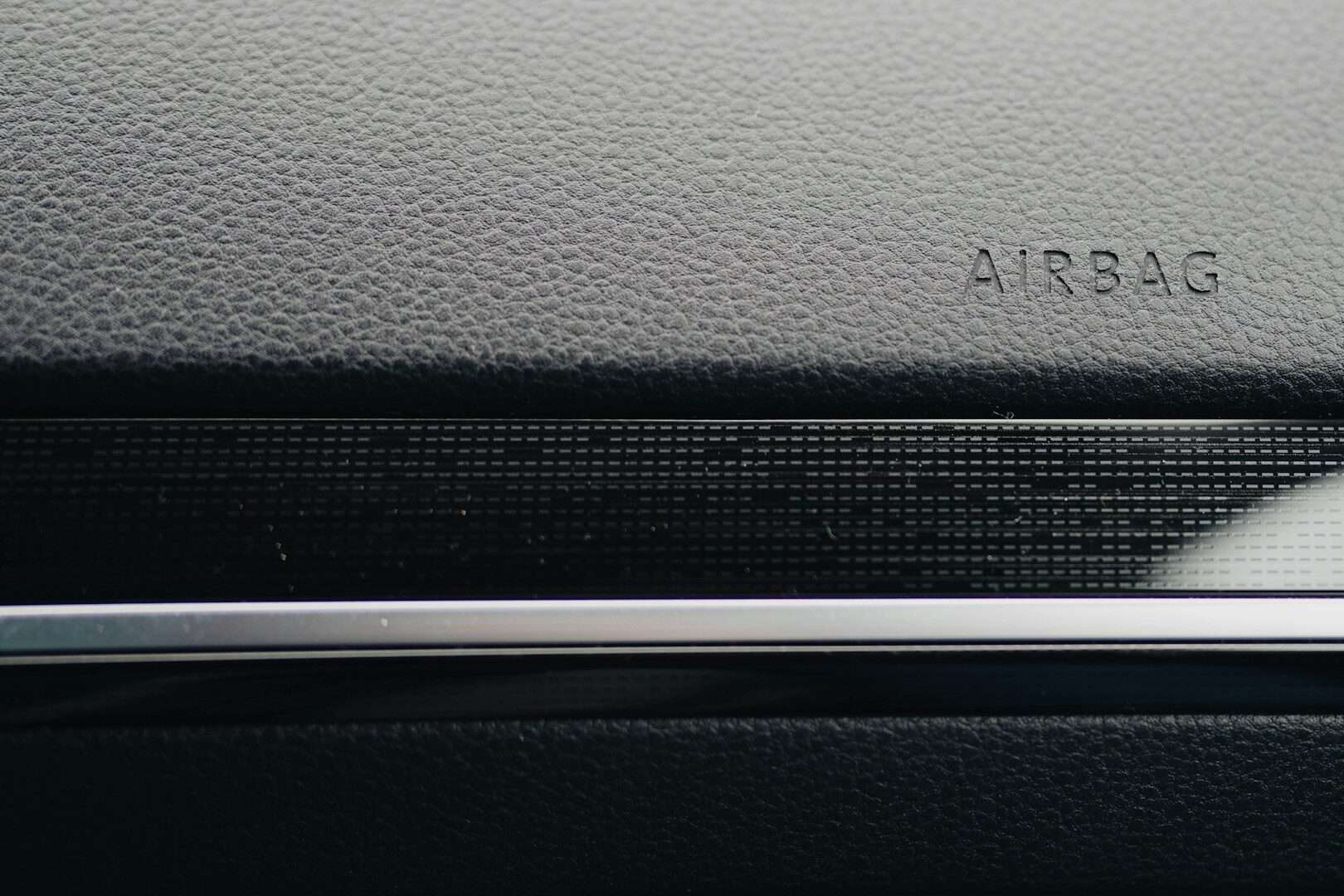
Twenty airbag modules arrived at Chicago O’Hare in August 2024 inside boxes that claimed to hold desktop night lights.
They were counterfeit Honda airbags, shipped from China to a used-car lot in Galloway, Ohio, and U.S. Customs and Border Protection seized them. According to the U.S. Attorney’s Office for the Southern District of Ohio, the same Chinese shipper sent four more batches that month, described the same cheerful way: desktop night lights, blue desktop nightlights. When agents searched JB Ohio Auto Sale in May 2025, they found more of them, some piled in a clothes hamper under a towel.
On September 4, the dealership’s owner, John Bojorquez, 35, of Columbus, pleaded guilty in federal court to trafficking in counterfeit goods. He admitted to at least 44 counterfeit airbags between August 2024 and May 2025, and he faces up to ten years. Homeland Security Investigations worked the case alongside the Department of Transportation’s Office of Inspector General, which tells you how the government actually understands this problem.
The clothes hamper is the detail everyone will repeat. It is not the important one.
The crime was the badge, not the bomb
Bojorquez pleaded guilty under the federal counterfeit goods statute, 18 U.S.C. 2320, the same law that reaches fake handbags and knockoff watches. The prosecutable wrong was the Honda name on the box. That these devices sit a few inches from a driver’s sternum and work by igniting a pyrotechnic charge is, in strict legal terms, context. Congress did write the danger into that statute, and penalties climb steeply when counterfeit goods cause serious bodily injury or death. But the hook is still the mark.
That is not a knock on the prosecutors. It is a description of the toolbox they were handed, and Honda has said so in public. In a March 2025 column on the company’s own newsroom, a member of American Honda’s government relations staff wrote that law enforcement’s authority here rests “primarily under federal trademark law.” That is precisely why the automaker helped stand up the Automotive Anti-Counterfeiting Council and spent years pushing model state legislation. By Honda’s own count, 38 states have adopted it. Twelve have not, in a country where used cars cross state lines by the millions.
The federal vehicle safety code is thinner here than most people assume. 49 U.S.C. 30122 bars a manufacturer, distributor, dealer, rental company or repair business from knowingly making a safety device inoperative. It is a real prohibition, and a used-car lot installing fake restraints falls squarely inside it, but it is a civil one. Meanwhile the Federal Motor Vehicle Safety Standards that govern airbag performance are certified by the automaker at the moment the car is built. Nobody certifies the module a shop bolts in four years and one collision later. When the government wants to send a counterfeit airbag trafficker to prison, trademark law is the door it walks through.
The deadliest fakes may not be counterfeit at all
Which brings us to the wreck sitting directly underneath this case.
In April 2026, NHTSA banned the sale and import of frontal driver airbag inflators marked DTN60DB, its first equipment ban in more than two decades. The agency’s running tally now stands at eleven people killed and three severely injured across fourteen crashes, most in vehicles whose factory airbags had been swapped out after an earlier collision. NHTSA has pointed out that the majority of those cars carried salvage or rebuilt titles.
Here is the twist. The company whose initials are stamped on those inflators, Jilin Province Detiannuo, told NHTSA it never sold them for installation in American vehicles and argued the parts may be counterfeits of its own product. NHTSA’s answer was that it makes no difference: the inflators are defective either way.
For safety purposes, that is the right call. For enforcement purposes, it is a gap you could drive a rollback through. A part wearing no automaker’s trademark, and quite possibly not even its stated supplier’s, is a part the government’s sharpest criminal tool in this space was never built to grip. Peel the Honda logos off those 44 modules in Galloway and the shipment becomes harder to charge without becoming one bit less lethal.
Nobody is coming to fix your car
This is the part that should change how you shop for a used car. Because these inflators are aftermarket equipment, they are not tied to a VIN, so a clean recall lookup tells you nothing at all about them. NHTSA has said a conventional recall is unlikely, because there is no list of affected vehicles and no identified importer to order one. Finding the part takes a technician physically inspecting the module to read an etched identifier and a number sequence on the connector side.
And the bill is yours. NHTSA’s guidance is unusually blunt about it: the owner pays for the inspection, and if a banned inflator is found, the owner pays for the replacement too. Eleven people are dead, the part is federally prohibited, and the remedy is an invoice you hand yourself. We have written about that blind spot in the recall system and about why you cannot recall a crime, and the Galloway plea is the same story viewed from the supply end.
Why the hamper existed
Ask why a used-car dealer would stash airbags in a laundry basket and the economics answer before the ethics do. A deployed frontal airbag is one of the line items that decides whether a damaged car is worth repairing at all. Genuine modules move through dealer parts channels, and the job is rarely just the bag; it pulls in related restraint hardware, a control module and diagnostic time. On a cheap, high-mileage sedan, that single repair is frequently what tips an insurer into calling the car a total loss.
A module out of a night-light box rewrites that arithmetic. It turns salvage into inventory. That is why NHTSA keeps describing the same profile over and over, rebuilt titles and airbags replaced after a previous deployment, and it is why the honest end of the trade gets punished for playing straight. A licensed recycler selling documented used parts, or a body shop ordering genuine restraints, cannot compete with a rival who treats life-safety hardware as a commodity import.
Customs, for its part, lists counterfeit airbags among the fakes with catastrophic consequences for drivers and reports that nearly 90 percent of its intellectual property seizures in fiscal 2025 originated in China and Hong Kong. The Galloway boxes were not exotic. They were routine, which is the uncomfortable part, and it is why federal agents keep warning about the flood of counterfeit parts.
What to remember
The private sector has started tightening on its own, with eBay’s restrictions on airbag listings taking effect this week, and Congress has begun reaching for import-side levers in legislation aimed at Chinese vehicle content. Both help. Neither closes the asymmetry at the center of this case.
We have built an enforcement system that is very good at protecting a badge and only incidentally good at protecting a chest.
So treat the badge as what it actually is: evidence of a crime, not evidence of safety. If you are buying a used car that has been hit, assume the restraint system is unverified until a technician has physically looked at it, and price that inspection into the deal. A clean VIN report is not an inspection. An airbag light that goes out at startup is not proof of a genuine airbag. The people who died in those fourteen crashes were, by NHTSA’s own account, in wrecks they should have survived.
Anyone who bought a vehicle from JB Auto Sale and suspects it has a counterfeit airbag is asked to contact the U.S. Attorney’s Office for the Southern District of Ohio at 888-529-2820. Suspect parts can also be reported to NHTSA at 888-327-4236.