
Volkswagen Group posted a third-quarter operating loss of €5.86 billion, against a loss of €1.3 billion a year earlier. Arno Antlitz, the Wolfsburg, Germany, automaker’s chief financial and chief operating officer, put it this way in the group’s Oct. 29 results release: “We cannot afford to lose any time and must act quickly and decisively.” The nine-month operating result fell to €0.1 billion from €5.4 billion.
Most of that loss is write-downs. Underneath them, Volkswagen is earning a 3.8% operating margin, carrying a €2.1 billion tariff burden through September according to its investor presentation, and selling electric cars that Antlitz says earn less than the combustion cars they replace. The company’s answer is a cost program of about €31 billion, and the release and Antlitz’s televised statement give no job numbers or capacity targets for it.
How €7.8 billion in special items produced the loss
Volkswagen booked €7.8 billion of special items in the third quarter, part of €8.7 billion for the nine months. The release lists a €6.4 billion non-cash impairment on Porsche goodwill, around €1 billion in impairments on assets of fully consolidated companies in China, and expenses tied to the planned sale of Volkswagen Osnabrück GmbH. Before special items, the nine-month operating result was €8.8 billion. The third quarter alone came to about €1.9 billion before them, a 2.5% margin by the presentation’s figures.
Goodwill is the premium a company’s books carry for an acquisition above the value of the assets it bought. When accounting rules find the business is worth less than that carrying figure, the difference is written off, and no cash leaves the company. The cash numbers show it: automotive net cash flow for the nine months was €4.4 billion, up from €1.8 billion a year earlier, and net liquidity stood at €33.0 billion on Sept. 30 against €34.5 billion at the end of 2025. The third quarter by itself was weaker, with automotive net cash flow of €1.2 billion against €3.1 billion in the third quarter of 2025.
Porsche’s own results look different from the charge attached to its name. The presentation shows the Sport Luxury brand group, which includes Porsche, with a third-quarter operating result of €285 million, a 4.1% margin, compared with a loss of €1.06 billion a year earlier. Over nine months its vehicle sales were 176,000, down 11% from 198,000. When Volkswagen disclosed the write-down on Sept. 25, The Auto Wire reported that the 911 was the only Porsche still growing, and that announcement came with a cut to Volkswagen’s 2026 margin forecast to 1%.
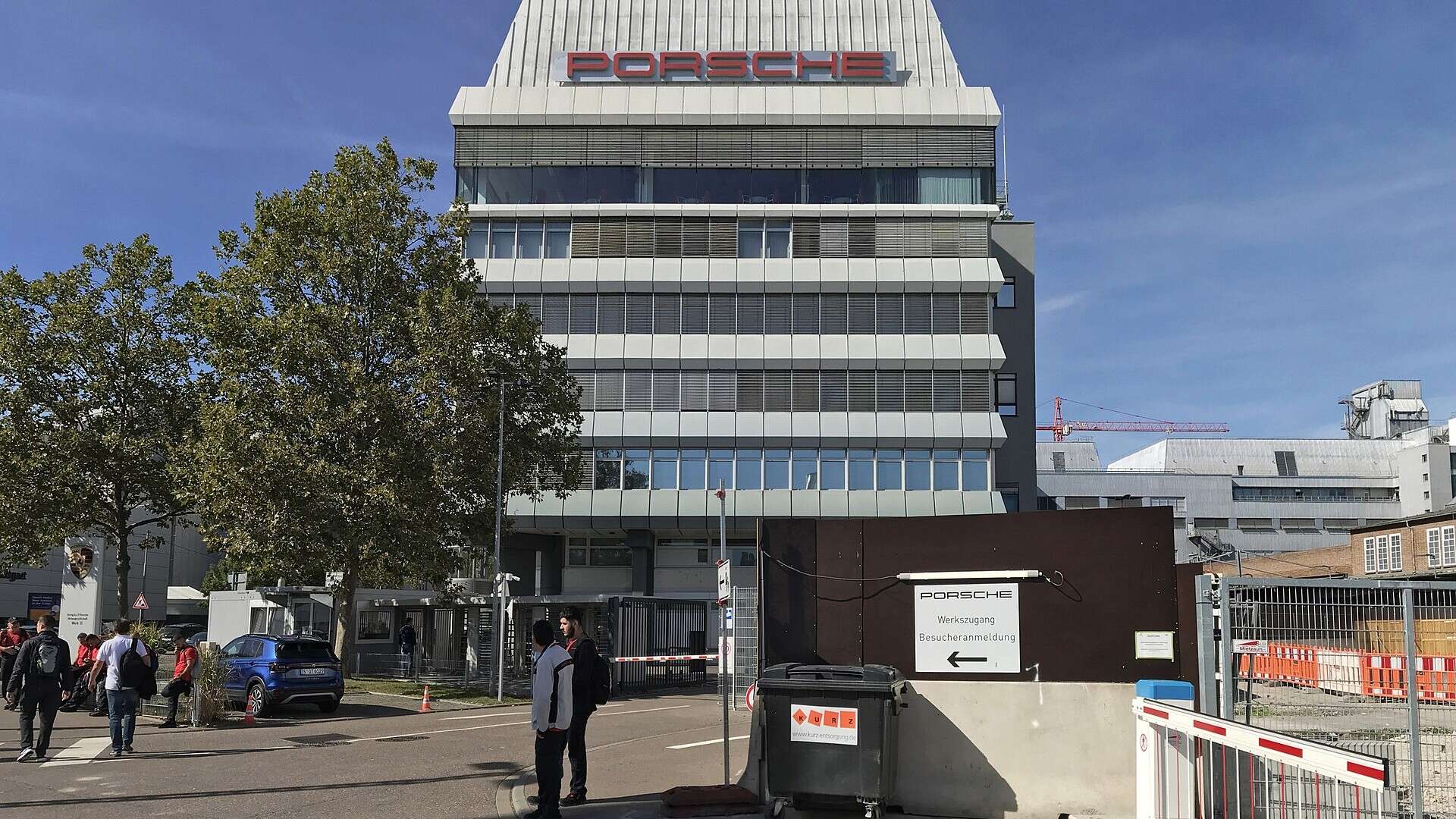
U.S. tariffs and electric-car margins squeeze the underlying business
Antlitz named both pressures in his televised statement, and the presentation puts a number on one of them: a €2.1 billion tariff burden for the first nine months, about a third of it carried by the Progressive brand group, which is Audi. The release also says tariffs weighed on the Trucks group’s result. Fewer cars are carrying those costs, too. Third-quarter deliveries fell 14.3% to 1.885 million, and nine-month deliveries fell 9.0% to 6.011 million, with weak Chinese market conditions and rising pricing and competitive pressure cited in the release.
On electric cars, Antlitz said Volkswagen currently earns less from them than from combustion-engine vehicles. The release reports European order intake up 4% to 3.0 million vehicles, with battery-electric orders up 39%, and says about 40% of the European order bank, roughly 1.1 million vehicles, is electric. On Antlitz’s own account, that makes the order bank a lower-earning one than a gas-heavy book would be, at least until battery and platform costs come down.
A €31 billion cost plan with no job numbers attached
The release describes the Future Plan measures as a streamlined model range, simpler structures and lower overhead costs, which together form a cost program of around €31 billion. Antlitz’s statement dates it to 2030 and adds plant efficiency. Neither document says which nameplates or factories are covered. The trend lines are in the numbers already published: group headcount was 648.1 thousand on Sept. 30, down from 662.9 thousand at the end of 2025, and the presentation shows Volkswagen AG’s active workforce in Germany at 96.5 thousand, down 19 thousand, or 16%, from the end of 2023.
The footprint is already moving. A footnote in the presentation says the third-quarter adjusted margin excludes costs tied to restructuring, an ID.4 U.S. production stop and the Osnabrück sale. In Mexico, the Puebla plant that builds the Tiguan, Jetta and Taos, which made up 59% of Volkswagen’s U.S. sales last quarter, had already lost a shift ahead of a strike deadline, as The Auto Wire reported on Oct. 1.
What the full-year forecast requires from the fourth quarter
Volkswagen’s 2026 outlook calls for sales revenue of around €315 billion and an operating return on sales of up to 1%, and it excludes any effects of the Group Target Picture 2030 and the planned sale of a majority stake in Everllence. The Auto Wire’s math, not the company’s: revenue of €233.4 billion through September leaves roughly €81.6 billion for the fourth quarter, and a 1% margin on €315 billion is about €3.15 billion for the year. With €0.1 billion booked, the fourth quarter would need to deliver around €3.05 billion, a 3.7% margin, at the top of the range. The third quarter produced about €1.9 billion before special items, and any new special items in the fourth quarter would pull the result the other way.
The next thing to watch is whether Volkswagen attaches plant and job numbers to the Group Target Picture 2030 that its forecast leaves out, because that is where the €31 billion cost program turns into decisions about specific factories and specific models.
VW says its EVs earn less than its gas cars, and about 40% of what Europeans are ordering is electric. In charge, would you ration the EVs until the margin catches up, or keep building them and eat the difference?